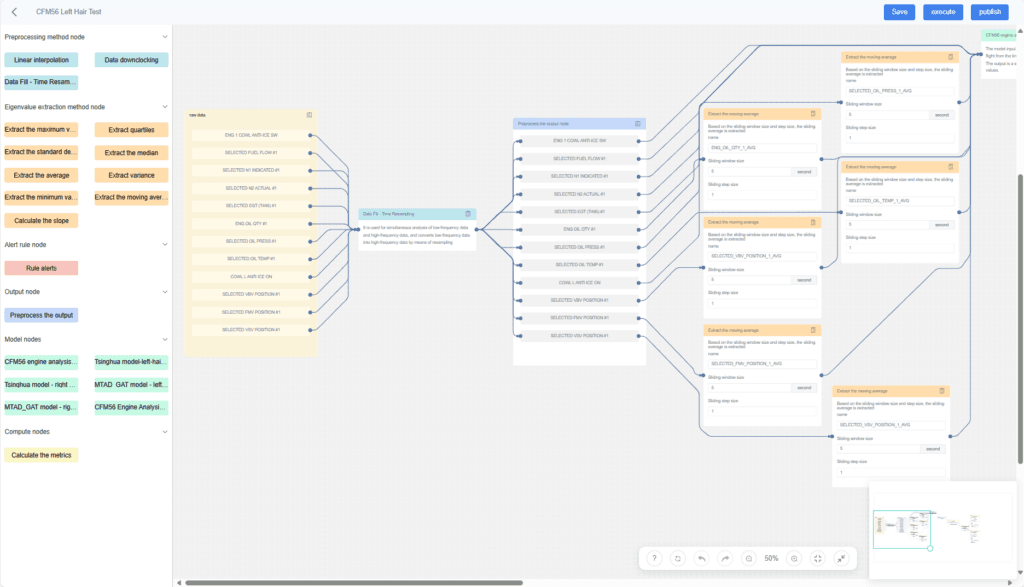
Data Fusion Services
Nahtlose Datenintegration und operative Erkenntnisse
DataMesh FactVerse Data Fusion Services vereint IoT-Sensoren, Unternehmenssysteme und Betriebslogs in einer gemeinsamen FactVerse-Datenumgebung. So entstehen saubere Datenflüsse für Digital Twins, Analyse, ML und Physical-AI-Entscheidungen.
Kernfunktionen
Diese Fähigkeiten bilden die Grundlage für den dargestellten operativen Nutzen.
- Wachsende Konnektoren, eine Pipeline
REST API, MQTT, OPC UA, BACnet, Modbus, JDBC, CSV, Microsoft Fabric und industrielle Adapter verbinden Daten ohne eigene Middleware.
- KI-Auto-Mapping zu Twin-Modellen
KI ordnet Sensortags und Datenfelder automatisch Digital-Twin-Entitäten zu und erkennt Namensmuster, Einheiten und Hierarchien.
- Wachsende Bibliothek für Transformationstemplates
Vorlagen für HVAC, Energie-Benchmarking, OEE, Alarmkorrelation, SPC und weitere Szenarien beschleunigen die Umsetzung.
- Datenbereinigung und Qualitätsengine
Ausreißer, Lücken, Einheiten und Zeitstempel werden automatisch bereinigt und pro Quelle bewertet.
- ML-bereiter Data Mart
Bereinigte Daten stehen für ML/AI, BI-Dashboards und FactVerse AI Agent bereit, ohne neue ETL-Pipelines.
- Echtzeit-Twin-Bindung
Live-Sensorwerte fließen direkt in 3D-Twin-Szenen, damit Operatoren den aktuellen Anlagenzustand sehen.
Überblick
DataMesh FactVerse Data Fusion Services (Datenfusionsdienst) ist eine Enterprise-Datenintegrationsplattform, die mehrere Datenquellen in das Digitalzwilling-Ökosystem vereint. Mit wachsenden Konnektoren, KI-Auto-Mapping und einer Bibliothek für Datentransformation wird ein End-to-End-Datenfluss vom Sensor zum Zwilling realisiert.
Typische Ergebnisse
Teams validieren den operativen Nutzen in einem fokussierten Pilot: bessere Sichtbarkeit, konsistentere Ausführung, sauberere Nachweise, schnellere Übergaben und klarere Entscheidungsgrundlagen. Die konkrete Wirkung hängt von Standortumfang, Datenreife, Prozessreife und Rollout-Tiefe ab.
Häufig gestellte Fragen
Wie implementiere ich Data Fusion Services?
Beginnen Sie mit klaren Zielen, prüfen Sie Datenquellen und Protokolle und konfigurieren Sie mit DataMesh oder einem Partner Ingestion, Mapping, Cleansing, Computation, Data Mart und Visualisierung.
Wie funktioniert das Lizenzmodell?
Das Modell kombiniert Node/Server-Lizenzen für On-Premises oder Private Cloud mit optionalen Services für Anpassung, Integration und AI/ML-Konfiguration.
Wie integriert sich Data Fusion Services in bestehende Systeme?
Standardprotokolle wie MQTT, OPC UA und HTTP sowie REST APIs und Dateien verbinden MES, ERP, IoT und andere Systeme. Daten werden anschließend bereinigt und Digital-Twin-Entitäten zugeordnet.
Welche Hosting-Plattform wird empfohlen?
Für Data Fusion Services wird Microsoft Azure als Hosting-Plattform empfohlen.
Verwandte Lösungen
Sehen Sie, wie dieses Produkt reale Anwendungsfälle unterstützt.