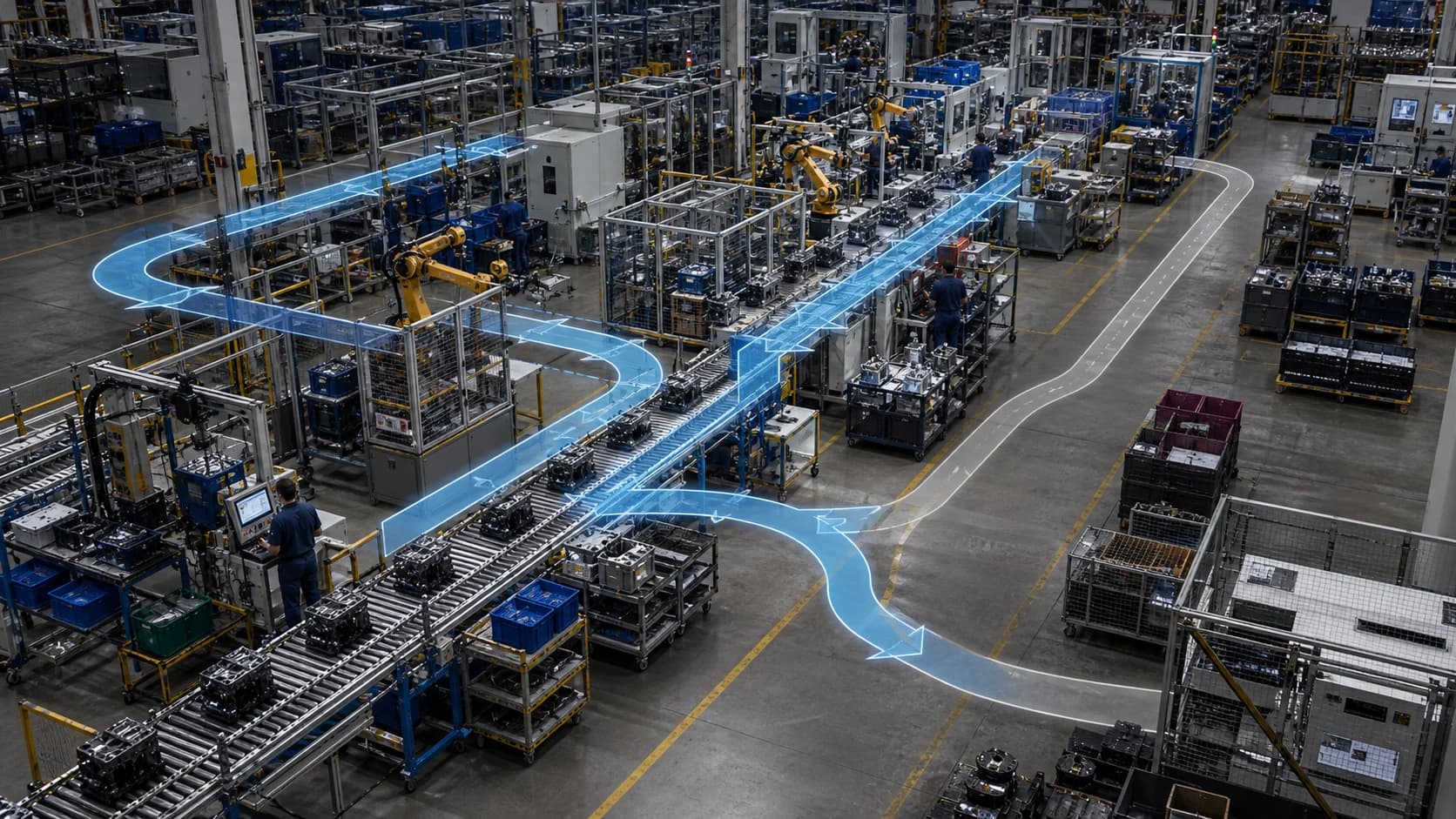
Production flow and layout optimization
Validate station layout, equipment sequence, material paths, buffers, operator motion, and line takt in a digital twin before changing the live floor.
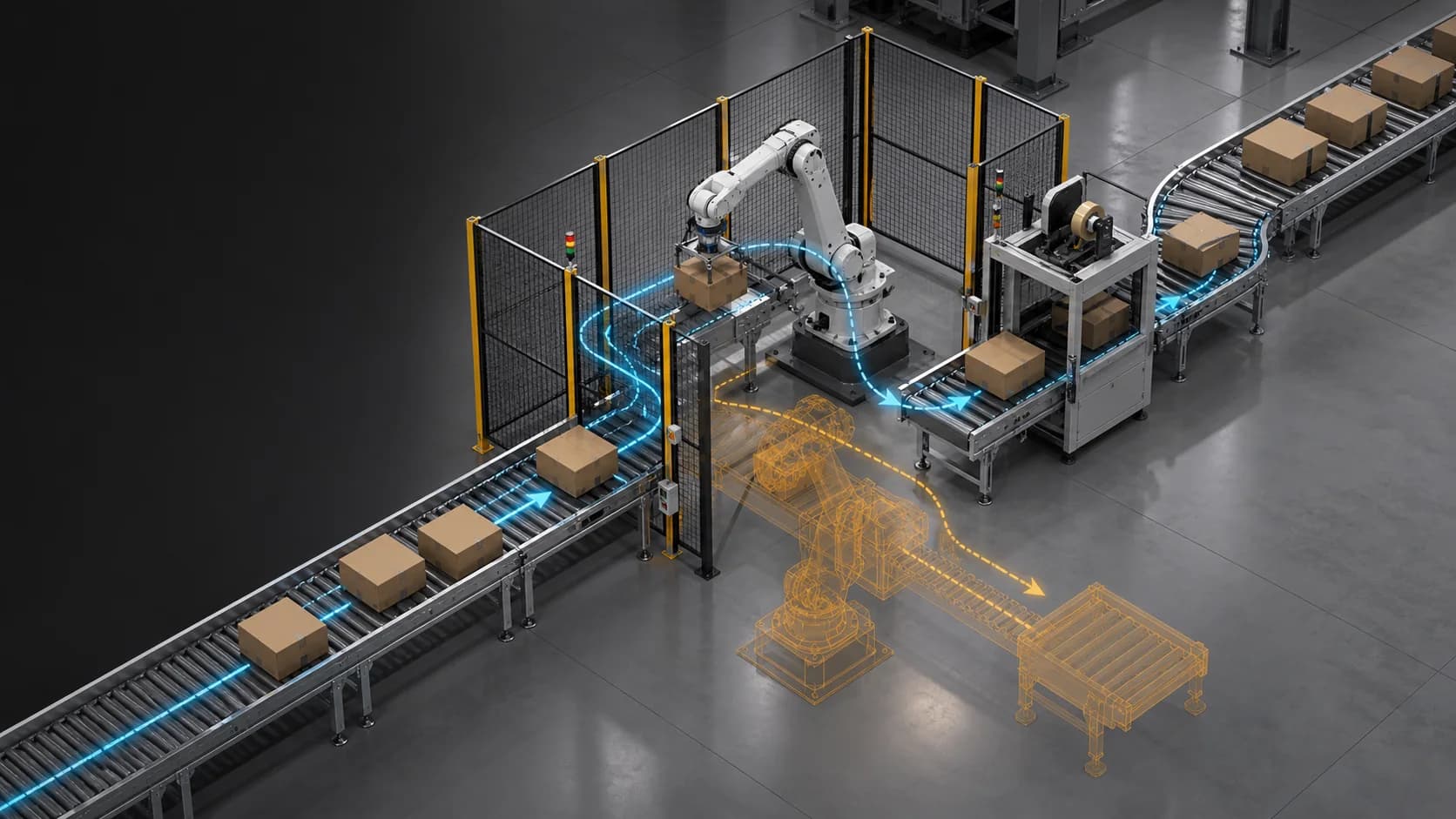
Physical AI and Operational Digital Twins for Manufacturing
Connect production equipment, process parameters, quality data, workforce activity, maintenance work orders, and simulation scenarios into an operational digital twin for visibility, diagnosis, simulation, and execution.
Connect data, workflows, and field execution so teams can understand context, act faster, and keep work traceable.
Use Data Fusion Services to connect MES, ERP, SCADA, PLCs, historians, sensors, and quality systems so production takt, equipment status, process parameters, and abnormal events share one operating context.
Build digital twins of lines, stations, equipment, material paths, and work areas in FactVerse so engineering, production, quality, and maintenance teams can share the same view of the shop floor.
Use FactVerse Designer for layout planning, process-logic modeling, takt and path validation, and connect to Omniverse and PhysX when physical behavior needs to be checked.
Inspector connects alarms, inspections, maintenance plans, work orders, field actions, and verification records so equipment risk becomes an executable workflow.
FactVerse AI Agent combines live signals, historical trends, and asset context to identify anomalies, explain inefficient patterns, suggest review actions, and connect confirmed findings to Inspector execution.
Director and DataMesh One turn equipment models, SOPs, and field steps into reusable 3D guidance and training for new operators, changeover teams, and maintenance technicians.
Practical applications and proven success scenarios across industries.
Validate station layout, equipment sequence, material paths, buffers, operator motion, and line takt in a digital twin before changing the live floor.
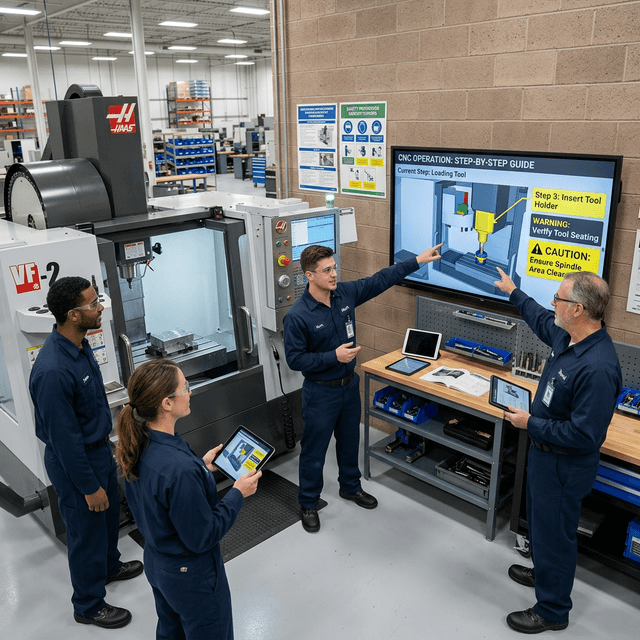
Turn critical equipment, work steps, risk points, and abnormal-response procedures into 3D training and field guidance without tying up production assets.
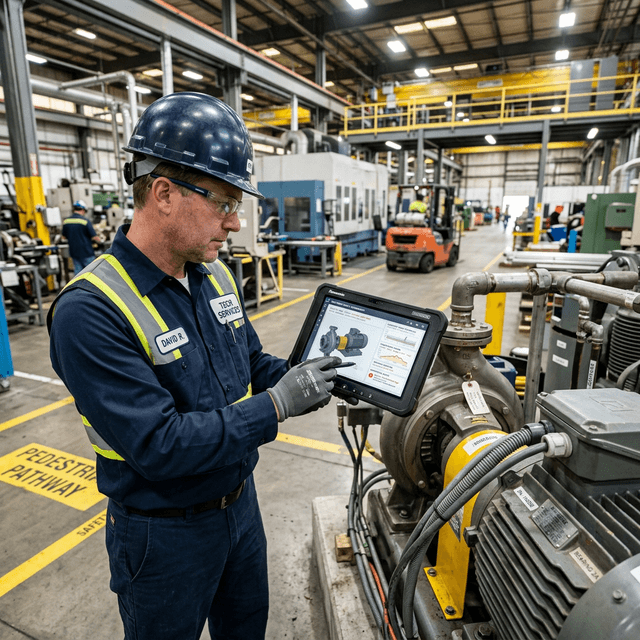
Bring equipment signals, inspection records, alarm history, and maintenance work orders into one twin view so teams can detect degradation earlier and track results.
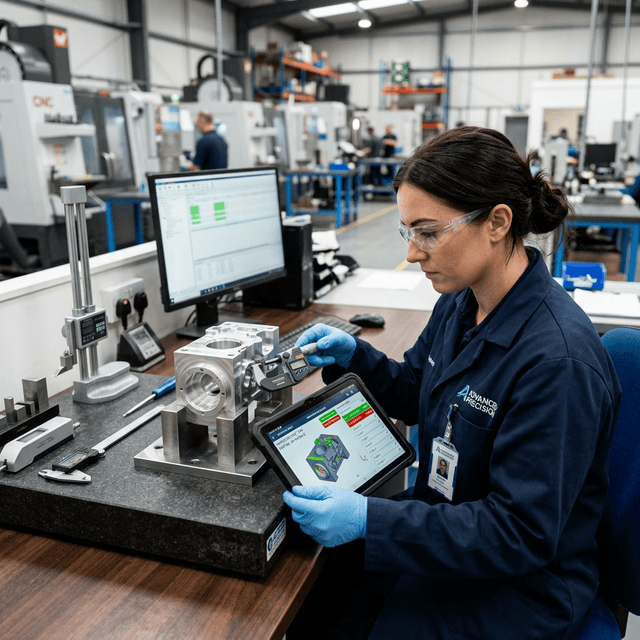
Relate quality issues to lots, equipment, process parameters, operator actions, and environmental conditions for cross-functional review, root-cause analysis, and corrective tracking.
Manufacturing digitalization needs to connect dashboards, reports, 3D scenes, planning, the floor, equipment, quality, and maintenance into a shared operating language: where production is drifting from plan, which machine or station is affecting takt, which parameters are related to quality variation, who should execute the recommendation, and how the result should be verified.
DataMesh supports discrete manufacturing, process manufacturing, packaging lines, utilities, and multi-plant operations by combining shop-floor data, 3D scenes, process logic, AI analysis, and Inspector execution workflows. The operating twin sits above MES, ERP, SCADA, and quality systems, connects their context, and turns that context into reviewable work.
Manufacturing data is usually distributed across many systems. MES records orders and operations. ERP holds plans and inventory. SCADA or PLCs provide equipment status. Historians store process values. Quality systems record inspection results. Maintenance systems keep inspections, alarms, and repairs. Any one system alone rarely explains the full operating issue.
DataMesh uses Data Fusion Services to connect these sources to FactVerse and map them to spaces, lines, stations, equipment, sensors, materials, operator work, and maintenance processes:
This semantic layer turns curves and tables back into concrete assets, stations, shifts, and process steps.
FactVerse lets teams review line status, equipment relationships, output trends, and abnormal locations in the same 3D shop-floor view. FactVerse AI Agent can help identify inefficient patterns such as takt variation, shifting bottlenecks, changeover loss, abnormal downtime, or quality variation, then surface the issues engineering teams should review.
When teams need to validate a change before touching the floor, process simulation belongs in FactVerse Designer. Designer can model layouts, material paths, station sequence, takt logic, and operator steps. For scenarios involving motion, collision, placement, or packaging processes, Designer can connect to Omniverse and PhysX to validate physical behavior.
Equipment risk needs an execution loop. Inspector places equipment health, alarms, inspections, work orders, repair records, and verification results in digital-twin context. Maintenance teams can move from an abnormal signal into the asset view, review related history and location, then turn a confirmed issue into work orders and field tasks.
This is useful for critical equipment, rotating assets, production support systems, utilities, and multi-site maintenance teams. It helps reduce the gap between seeing an abnormal condition and closing the response, while preserving experience, records, and reviews for future work.
Many manufacturing issues come from inconsistent work understanding, long training cycles, frequent changeovers, and reliance on individual experience. Director can turn equipment models, SOPs, inspection steps, risk notes, and abnormal-response procedures into 3D training and field guidance, delivered through DataMesh One on mobile, desktop, or XR devices.
When SOPs or equipment conditions change, training content can stay aligned with the digital twin and the operating process. Training becomes part of the production, maintenance, and quality system.
Quality issues are rarely caused by one parameter alone. DataMesh helps teams relate quality results to lots, equipment state, process parameters, environmental conditions, operator actions, changeover events, and maintenance records. AI Agent can help narrow the patterns worth reviewing, but final root-cause decisions should still be confirmed by engineering, quality, and production teams.
Good starting scenarios include:
| Phase | Focus | Output |
|---|---|---|
| Select a pilot | Start with one line, one process cell, one bottleneck asset family, or one training scenario | Problem statement, data scope, validation criteria |
| Build the data foundation | Connect equipment status, process values, quality results, alarms, maintenance, and production records | Traceable data mapping and asset context |
| Build the operating twin | Model lines, stations, equipment, material paths, operator steps, and critical processes | Visual shop-floor view and semantic model |
| Create the execution loop | Convert AI analysis, simulation results, or field findings into Inspector work orders, SOPs, or corrective tasks | Executable and reviewable operating records |
| Scale and reuse | Copy validated models, templates, and training content to more lines or sites | Consistent operating capability across sites |
Manufacturing projects should verify reviewable improvements: whether the floor is more transparent, abnormalities are located faster, maintenance closes the loop, training is more consistent, and changes can be tested before physical work starts. Actual impact depends on asset condition, data quality, process maturity, team execution, and rollout scope.
Continue with the most relevant products, solutions, guides, and public references for this topic.
DataMesh works best as an operational digital twin and Physical AI layer. Data Fusion Services connects existing systems and organizes distributed data into context for shop-floor decisions and execution.
Process simulation, layout planning, virtual dry runs, and physics-based validation are primarily FactVerse Designer workflows. AI Agent can use these scenes and operating data for analysis and recommendations, but it is not the authoring environment for simulation.
AI Agent is an analysis and decision-support layer. It helps identify anomalies, explain trends, and suggest actions. Equipment control, process changes, and maintenance actions remain governed by engineering approval, existing control systems, and Inspector work-order flows.
Common starting points include equipment status, key process parameters, alarms, output, quality results, changeover records, inspections, and maintenance work orders. Start with one line, one critical cell, or one family of bottleneck assets, then improve data quality through the pilot.
Start from a specific operating problem such as bottleneck identification, equipment degradation, changeover training, quality exceptions, or maintenance closure. The twin becomes an operating tool when it is tied to live data, process ownership, and execution records.
Use a focused proof of concept to validate operational value before a wider rollout.