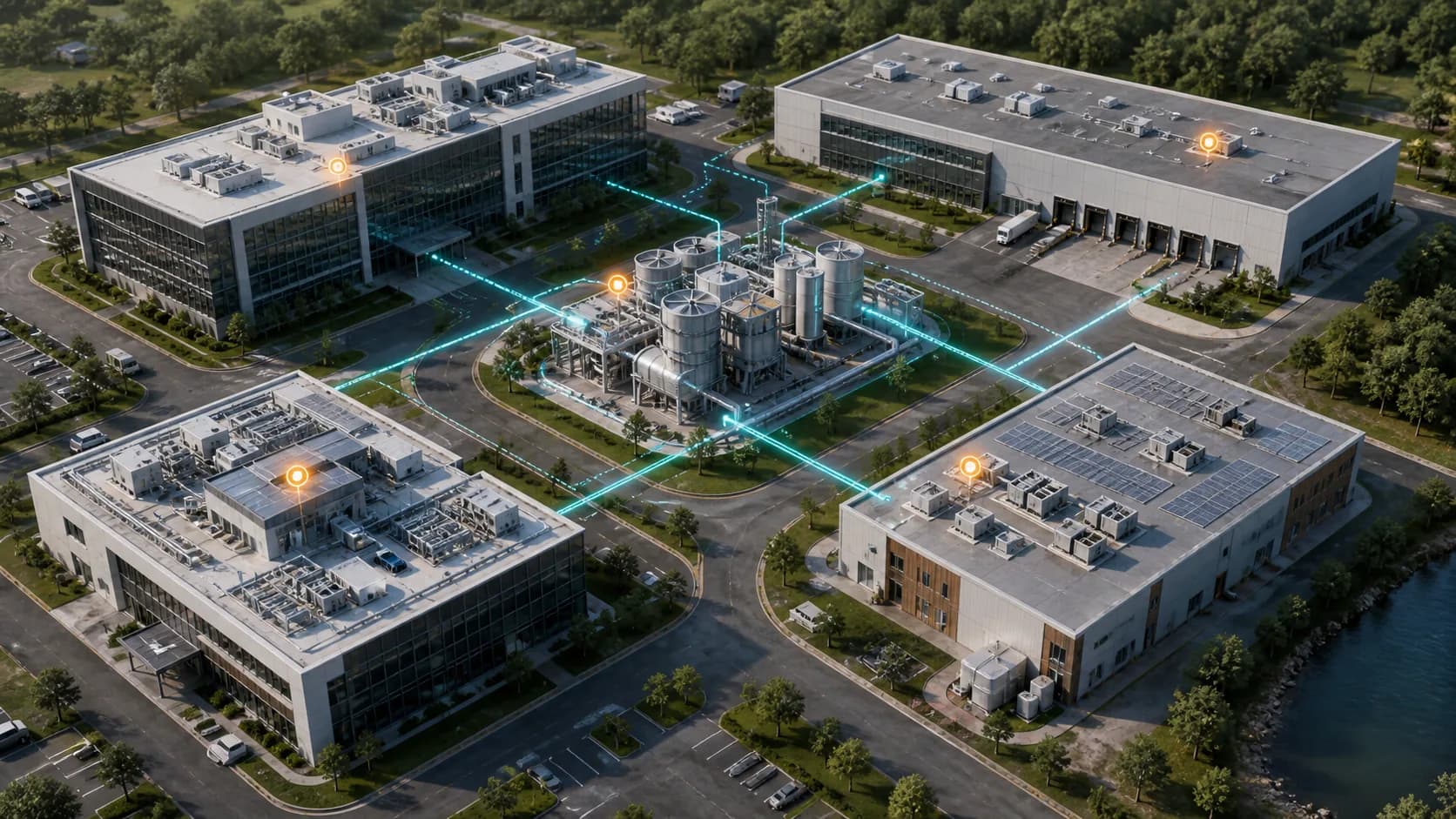
Multi-building facility operations
Give facility owners and service teams a consistent view of asset status, alarms, maintenance activity, and operating priorities across buildings and sites.
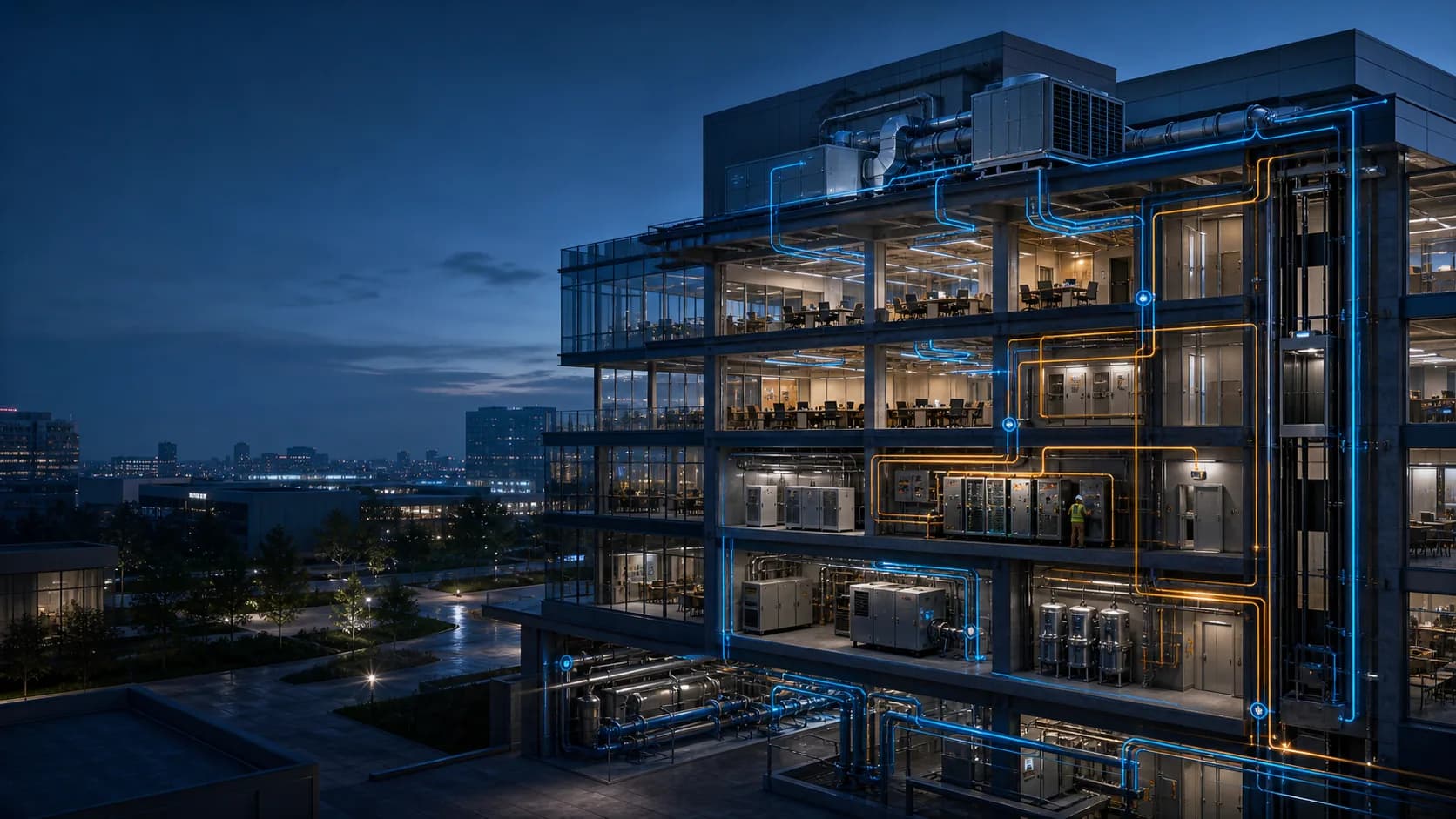
Turn fragmented building systems into coordinated facility operations
Connect building systems, operational data, digital twins, and field work in one facility operations environment for faster response and accountable execution.
Connect data, workflows, and field execution so teams can understand context, act faster, and keep work traceable.
Bring spaces, systems, assets, alarms, energy data, service history, and active work into a shared digital twin for buildings and campuses.
Use Data Fusion Services to connect BACnet, Modbus, OPC UA, MQTT, REST, BMS, IoT, meters, and enterprise systems while retaining the systems already in place.
Give teams the asset context, procedures, work orders, photos, and verification records needed to move from an operating signal to accountable field action.
Organize buildings, zones, equipment, meters, sensors, points, and system relationships with Brick Schema-aligned semantics in Inspector.
Keep energy data, inspections, maintenance actions, and improvement evidence connected for EUI review, deeper analysis, and Green Mark preparation.
Practical applications and proven success scenarios across industries.
Give facility owners and service teams a consistent view of asset status, alarms, maintenance activity, and operating priorities across buildings and sites.
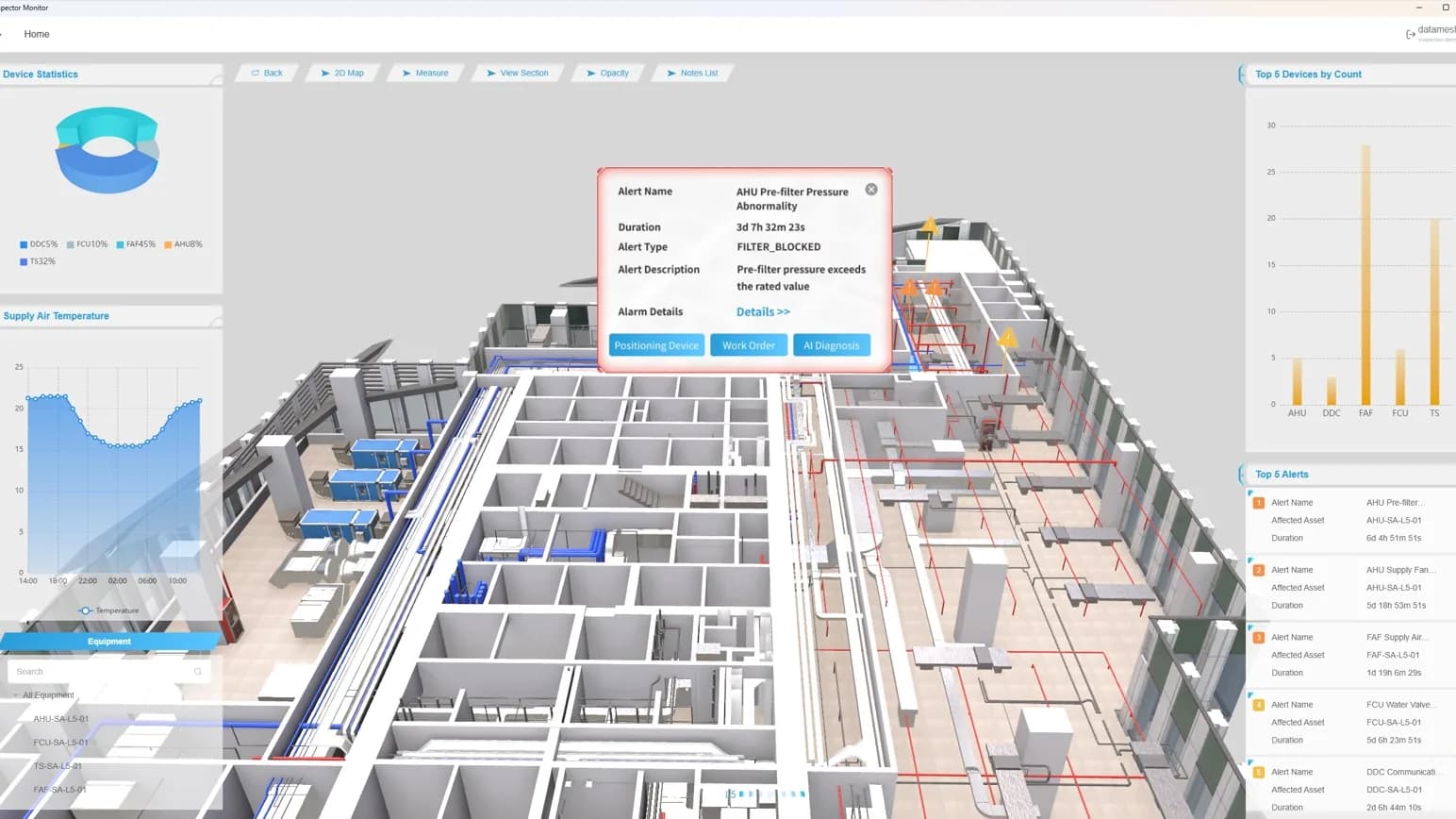
Place alarms in spatial and equipment context, route confirmed issues into work orders, and preserve the record from review through completion.
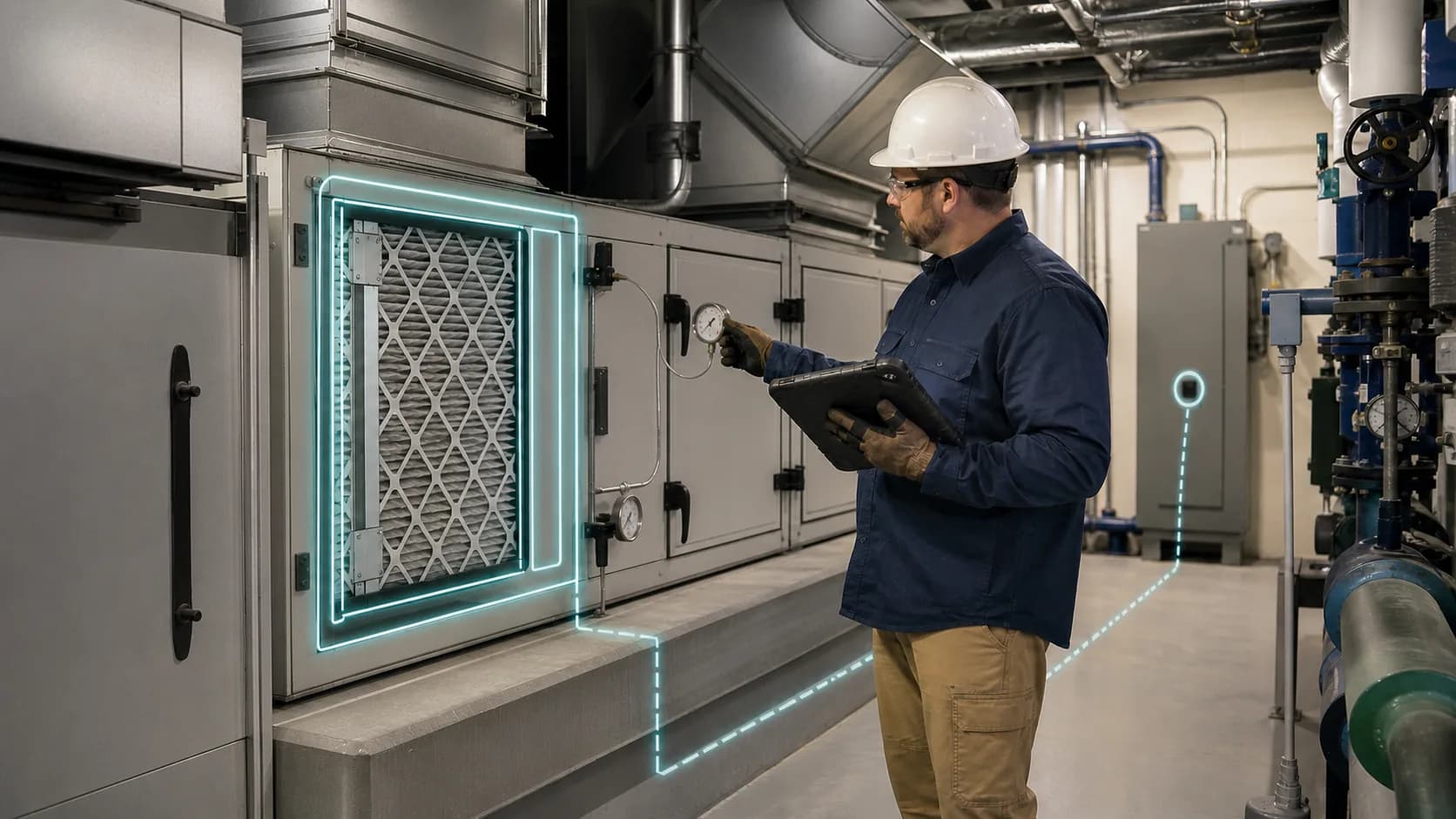
Deliver asset history, live signals, documents, and step-by-step procedures at the point of work so technicians can act with greater consistency.
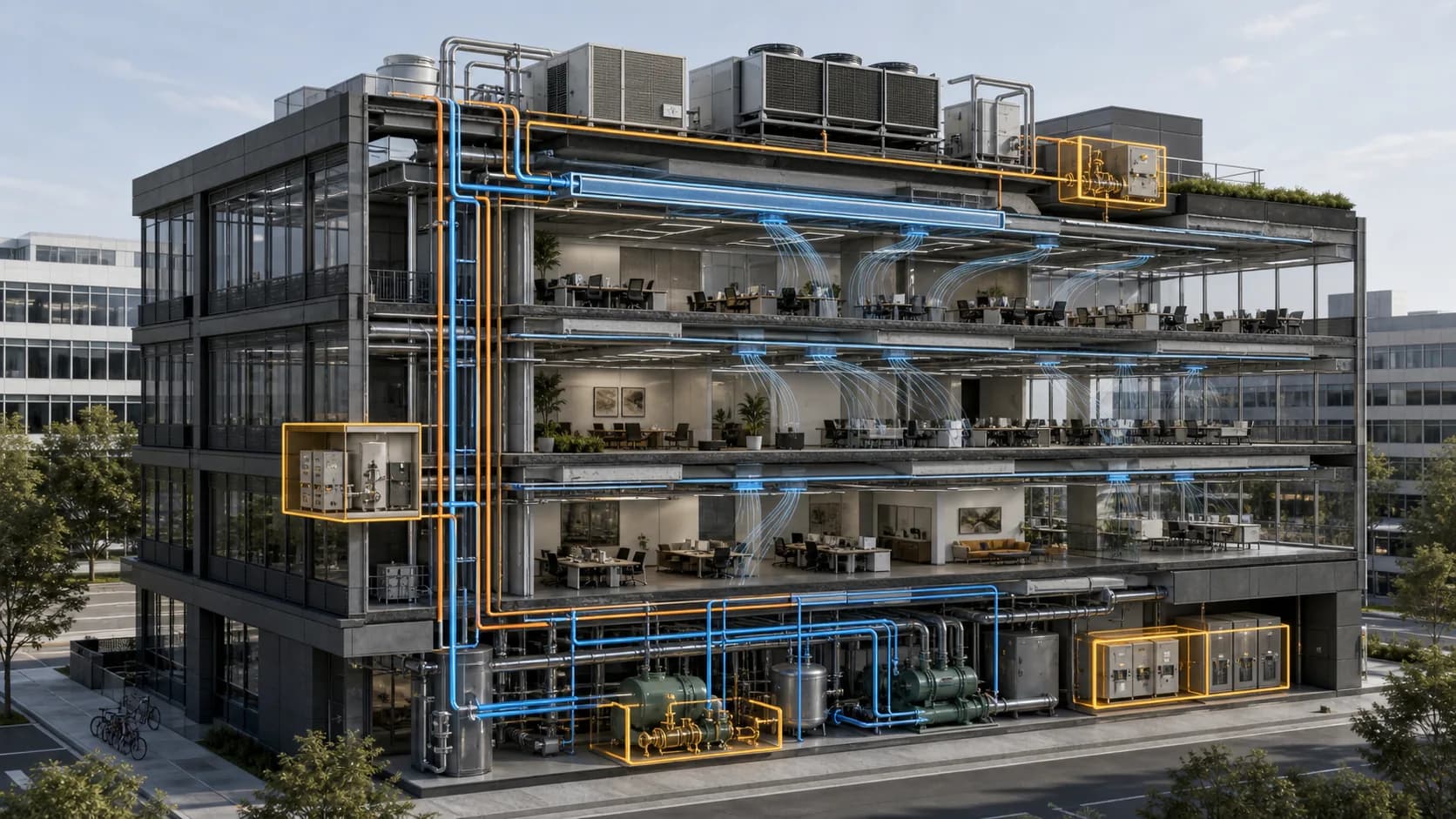
Connect meters, operating schedules, equipment condition, and maintenance evidence to investigate energy performance and compare improvement priorities.
Buildings and campuses already generate large volumes of information through BIM, BMS, meters, IoT devices, maintenance platforms, documents, and field records. The operating challenge is keeping that information connected when an alarm occurs, a technician is dispatched, or management needs to understand performance across a portfolio.
DataMesh creates a shared operating context for facility owners, engineering teams, service providers, and frontline technicians. They can see what happened, where it happened, which assets and systems are involved, what work is underway, and what evidence remains after the issue is resolved.
Data Fusion Services connects building controls, sensors, meters, databases, and enterprise applications through standard protocols and APIs. FactVerse maps that information to spaces, assets, systems, and relationships in an operational digital twin.
This approach gives facility teams a consistent view across multiple vendors and sites while preserving existing BMS, CMMS, EAM, and service platforms. New sources can be added as the facility program expands.
A connected facility operation follows a practical loop:
Where data quality and operating procedures are ready, FactVerse AI Agent can assist with trend review, anomaly interpretation, and work prioritization while keeping people responsible for operational decisions.
Inspector supports Brick Schema-aligned relationships for buildings, floors, zones, equipment, meters, sensors, control points, and systems. This shared facility context helps different teams interpret the same asset and data consistently. It also makes records easier to reuse across monitoring, maintenance, energy analysis, compliance preparation, and future AI-assisted workflows.
Energy performance depends on equipment condition, schedules, control behavior, maintenance quality, and how spaces are actually used. DataMesh connects these operating records so teams can review EUI and load patterns, investigate exceptions, assign corrective work, and retain the resulting evidence.
For Singapore Green Mark programs, the same record can support ongoing evidence preparation and review with appointed consultants. When a project requires deeper analysis, BIM or IFC data, weather data, operating history, and EnergyPlus-based models can be combined to compare energy performance and potential improvement scenarios.
A focused first phase may cover a critical building system, an alarm-to-work-order workflow, an energy-intensive area, or a group of assets with recurring service issues. The team can validate data quality, integration behavior, field adoption, and useful operating measures before extending the solution across more systems, buildings, and sites.
It helps facility teams coordinate fragmented building data, alarms, maintenance records, work orders, and field procedures across complex buildings and campuses.
Data Fusion Services connects existing BMS and IoT sources through standard protocols and APIs, then maps their data to assets, spaces, and systems in the operational twin.
Yes. DataMesh can exchange asset, alarm, work-order, and completion data with existing CMMS, EAM, and service systems while Inspector provides a shared execution layer.
It organizes operating data, energy records, inspections, maintenance actions, and corrective evidence so facility teams and appointed consultants can review a traceable record.
When deeper analysis is required, BIM or IFC data, weather data, operating records, and EnergyPlus models can be combined to evaluate EUI, load composition, and improvement scenarios.
Continue with the most relevant products, solutions, guides, and public references for this topic.