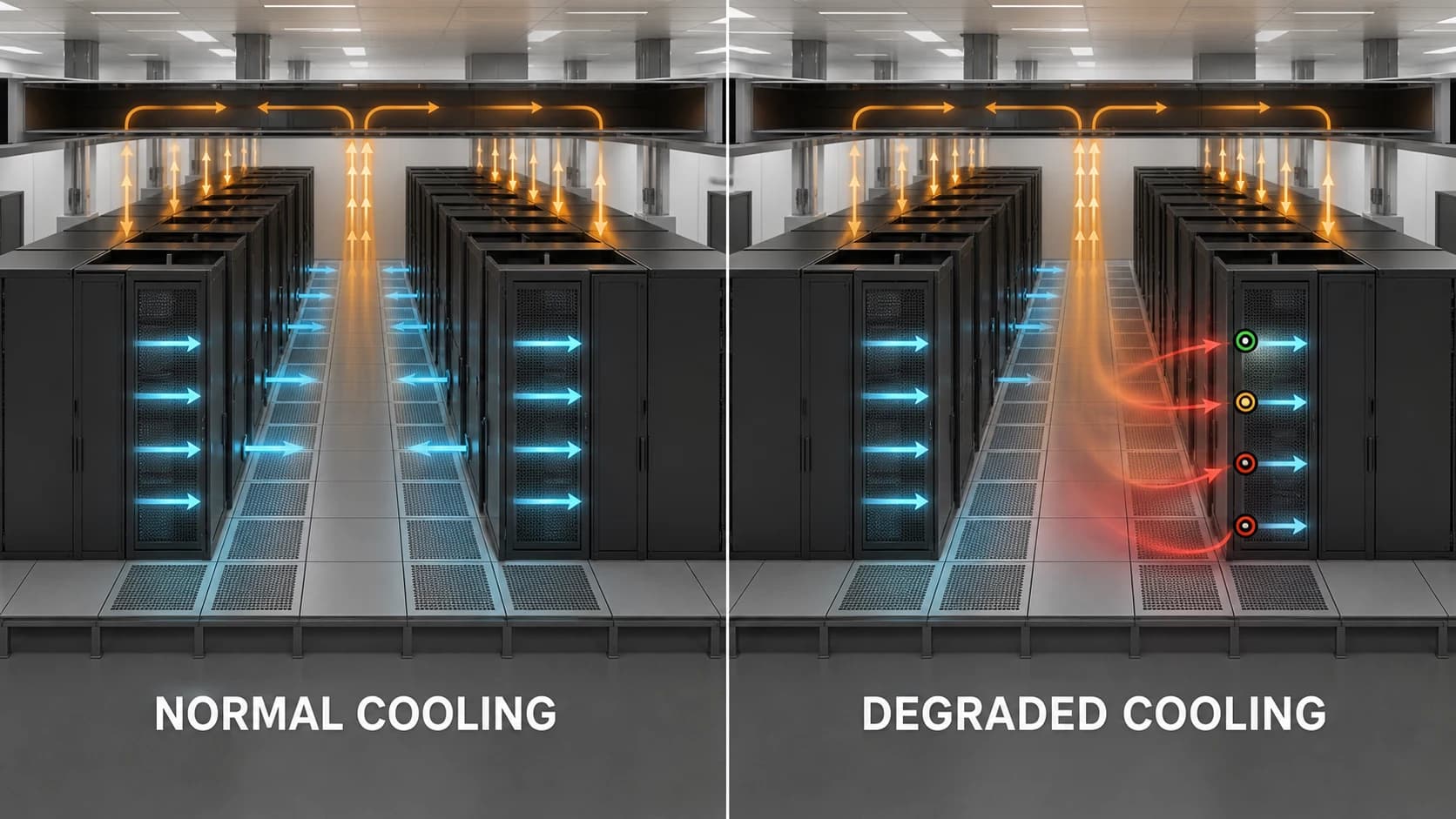
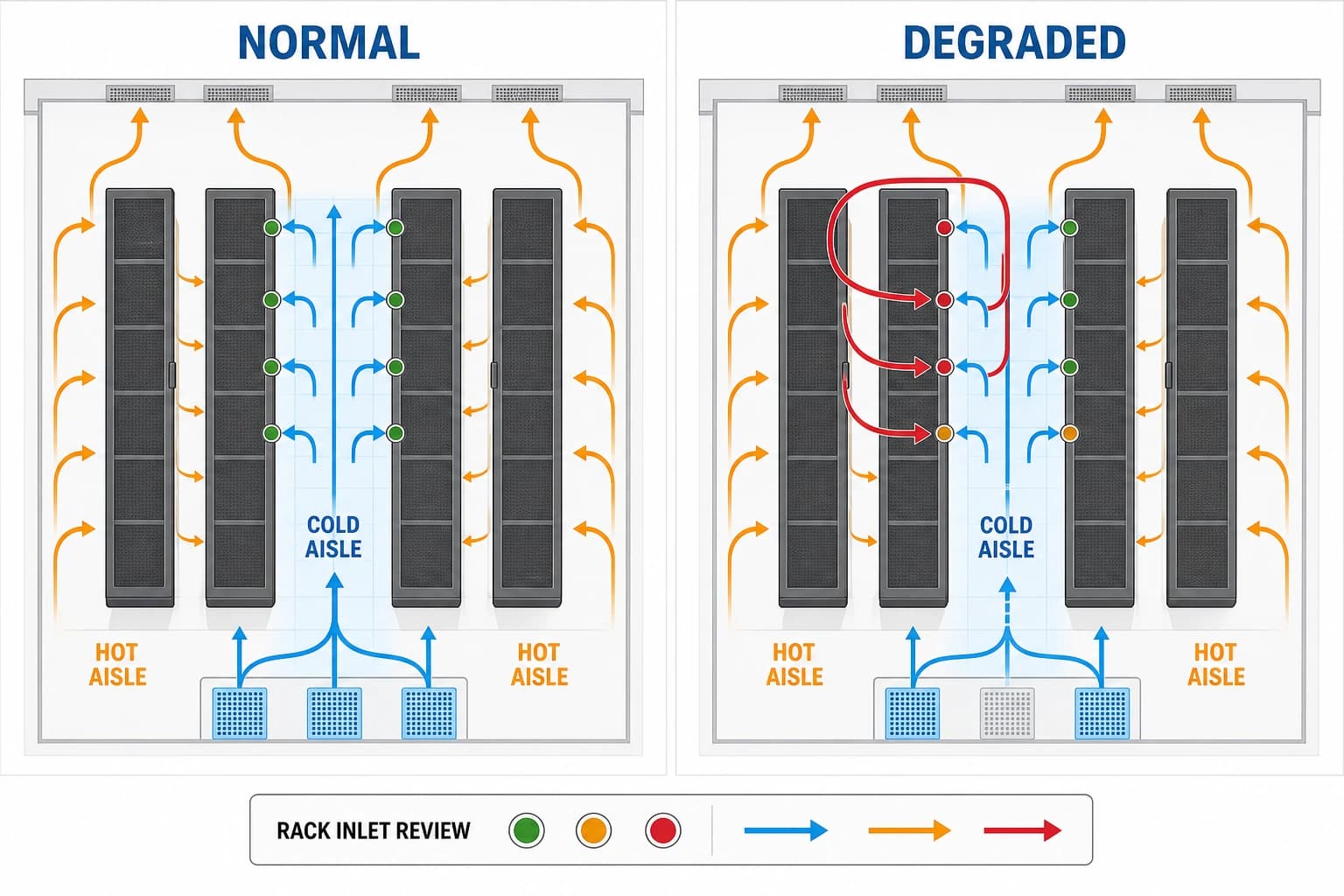
Capacity growth and layout planning
Review representative rack loads, density, containment, cooling distribution, and layout options against the current facility context.
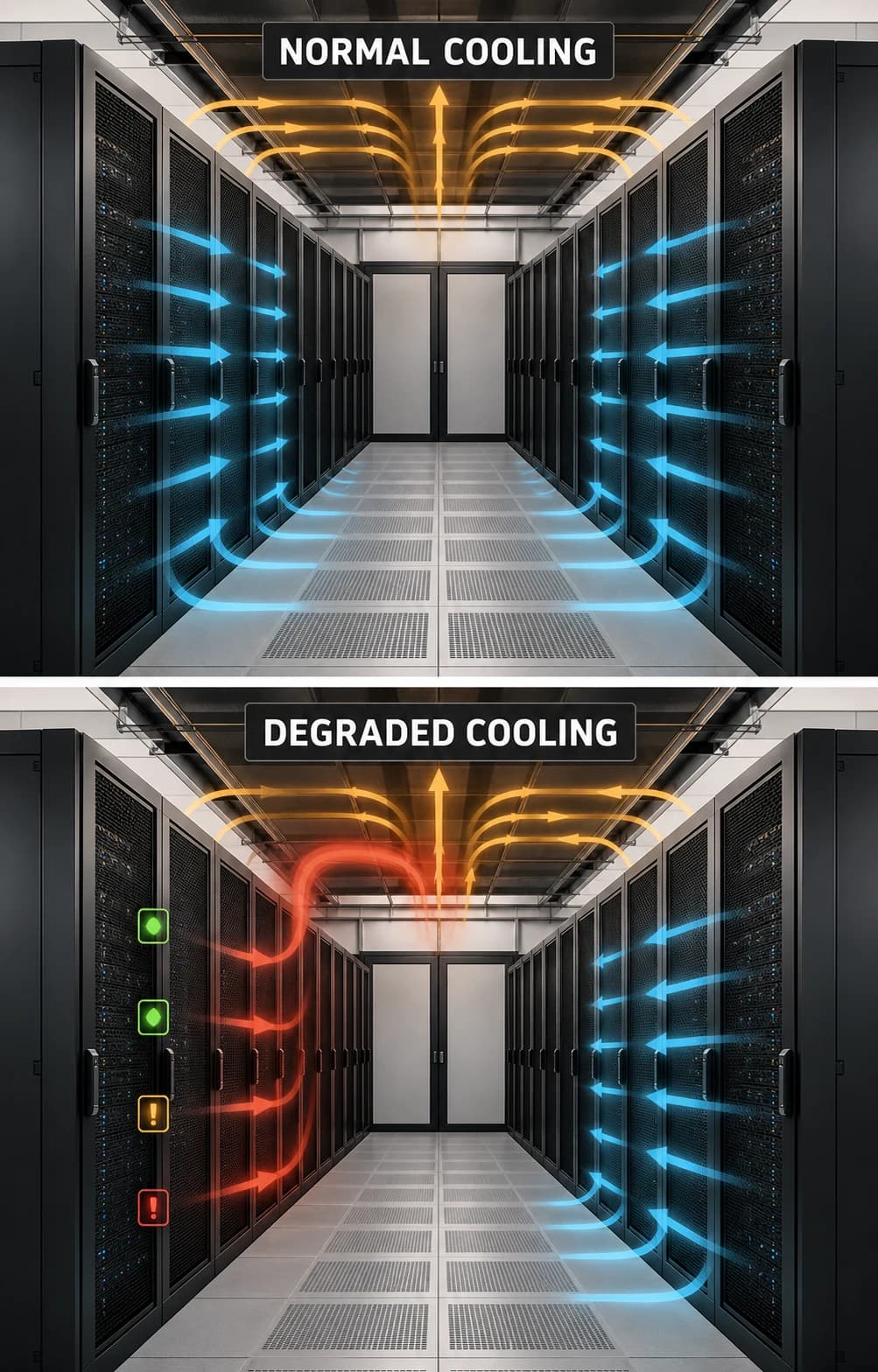
Understand the facility. Test the change. Act with evidence
Give operations teams and AI Agents the facility context to understand conditions, test changes, and move approved decisions into inspection and maintenance workflows.
Connect data, workflows, and field execution so teams can understand context, act faster, and keep work traceable.
Connect rooms, racks, facility equipment, power paths, cooling zones, meters, sensors, documents, and service ownership in a shared spatial model.
Relate alarms, equipment condition, environmental telemetry, maintenance history, and asset criticality so teams can focus investigation where it matters.
Compare defined rack-load, layout, containment, airflow, temperature, and cooling-degradation scenarios before a physical change is approved.
Combine condition signals, anomaly evidence, service history, and operational impact to prepare maintenance priorities for engineering review.
Carry approved findings into inspections, work orders, field evidence, repair history, and post-work verification through Inspector or an existing maintenance system.
Use the governed facility twin to rehearse procedures and, where the project supports it, validate robot tasks before work reaches the live site.
Practical applications and proven success scenarios across industries.
Review representative rack loads, density, containment, cooling distribution, and layout options against the current facility context.
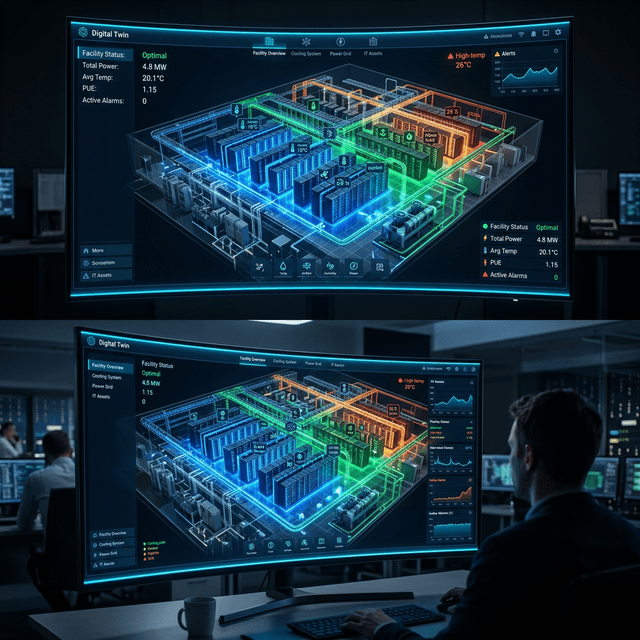
Identify affected rooms, racks, facility equipment, dependencies, recent alarms, and work history before assigning the next approved action.
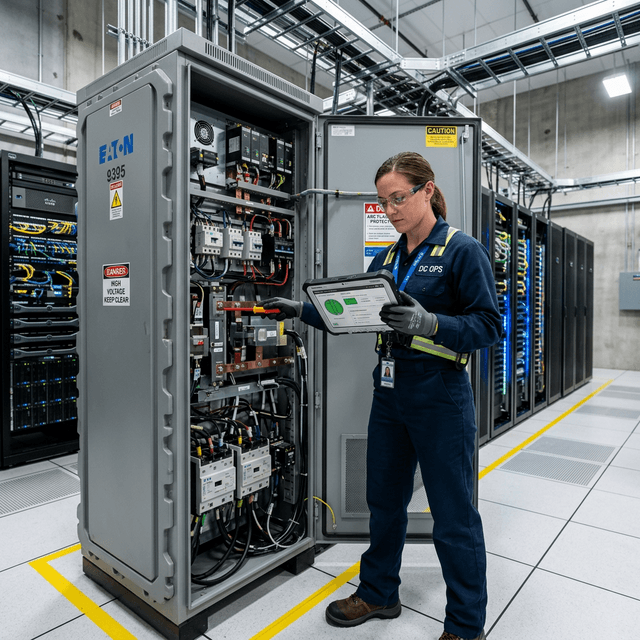
Review condition changes and maintenance evidence for cooling, power, and supporting equipment, then route accepted priorities into work planning.
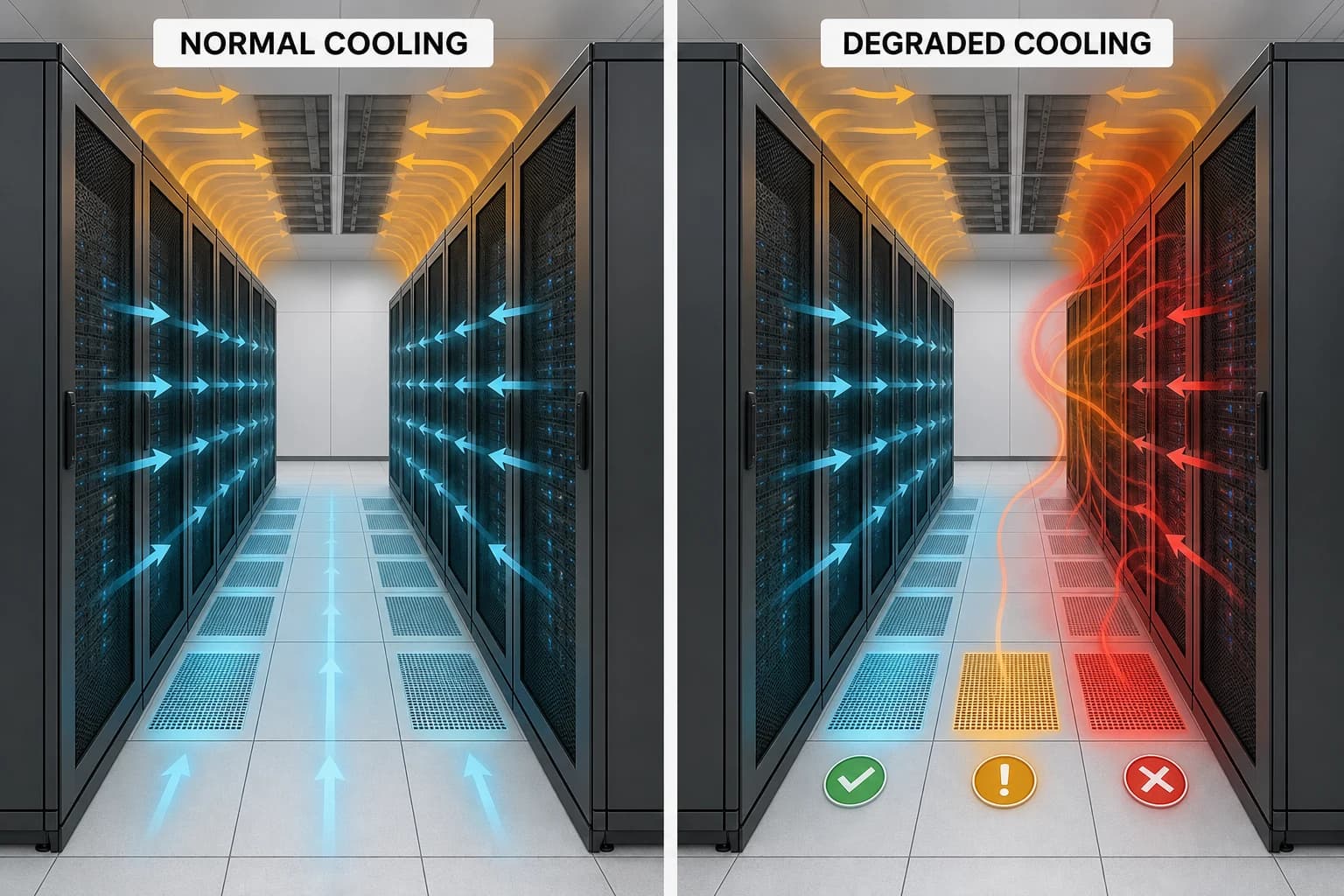
Prepare personnel for inspection and maintenance, and validate selected robot tasks against a controlled virtual facility before site acceptance.
AI computing centers concentrate power demand in high-density racks and bring air cooling, liquid cooling, electrical distribution, and changing compute loads into the same facility decision. A rack move or hardware refresh can change several of these conditions at once. Teams need a current view of equipment dependencies and operating limits before approving the next change.
Operations teams make decisions across rooms, racks, power paths, cooling equipment, meters, alarms, inspections, and maintenance systems. Each source describes part of the facility. DataMesh connects those sources to the same asset, location, dependency, and work context so people and AI Agents can interpret conditions against an operating model of the site.
The operational twin connects understanding, engineering evidence, approval, field execution, and feedback in one governed workflow.
Bring the proposed rack population, representative load, room geometry, containment, cooling state, and measured conditions into a controlled comparison. Project-enabled thermal analysis can show where rack-inlet margin may narrow and which alternatives deserve qualified engineering review before installation.
Place the alarm beside the affected asset, upstream and downstream dependencies, recent readings, service history, open work, and nearby operating conditions. FactVerse AI Agent can help summarize the evidence and prepare investigation priorities while the responsible team retains control of diagnosis and action.
Condition signals, anomaly evidence, asset criticality, prior work, and operational impact can be reviewed together. Accepted maintenance priorities move into planning, assignment, field evidence, and closeout without losing the reason behind the decision.
Teams can rehearse inspection and maintenance procedures in the facility context before working around live equipment. Project-enabled robotics workflows can use the same governed scene to prepare and validate selected tasks, with hardware integration, sim-to-real testing, safety approval, and site acceptance defined for each deployment.
Daily operations begin with connected facility evidence. When a decision depends on airflow, temperature fields, or changing equipment states, DataMesh can add a project-enabled thermal-fluid study with a defined question, geometry, load model, boundary conditions, measurements, and review owner.
Exploratory models help screen options. Benchmarked models add repeatable reference checks. Site-calibrated models support site-specific decisions covered by the calibration scope. Every result should retain its input versions, assumptions, checks, limits, and review record.
Read the guides to rack-inlet temperature and thermal margin, cooling-failure scenario analysis, and load-growth capacity analysis for the corresponding evidence requirements.
The NVIDIA Omniverse DSX Blueprint for AI Factory Digital Twins gives developers an OpenUSD-based reference framework with SimReady assets and electrical and thermal simulation workflows. FactVerse and its Omniverse workflow can bring facility assets, relationships, and operating data into those visualization and simulation paths. This helps teams reuse design-stage digital assets as they evaluate capacity, cooling, and maintenance decisions after commissioning. Project teams define the model, site calibration, and acceptance criteria for each study. Read the AI computing center solution announcement.
DataMesh complements existing infrastructure and maintenance platforms. Data Fusion Services aligns identities and records across DCIM, BMS, EPMS, meters, historians, CMMS, and enterprise systems. FactVerse maintains spatial and dependency context. FactVerse AI Agent assists investigation and prioritization. Inspector or the connected maintenance platform manages approved execution and evidence.
Detailed setup, BMS mapping, AI-assisted review, work-order closure, and FactSim procedures are available in the Data Center Operations documentation.
For an operating site, a practical first phase connects one room, its critical assets, selected infrastructure data, alarms, and maintenance records, then proves one investigation or change workflow. For a new facility, the team can begin from BIM, equipment information, commissioning evidence, and handover records so the operating twin is ready before routine operations begin.
DataMesh has delivered digital twin systems across multiple overseas data center sites for an international telecom operator. That experience anchors the solution in asset management, energy calculation, inspection and repair workflows, and operational visualization. Thermal, capacity, and robotics studies extend that foundation when a defined project and evidence scope require them.
Data Fusion Services connects infrastructure, meter, sensor, alarm, asset, and maintenance records. FactVerse adds spatial and relationship context, while Inspector or the connected CMMS manages approved field execution and evidence.
Operational and simulation evidence enters the customer's engineering review and change process. The responsible engineering and operations teams retain authority over live controls, operating limits, emergency procedures, and field execution.
A project can compare rack-inlet conditions, thermal margin, selected cooling-degradation states, representative load growth, rack density, containment, cooling distribution, and layout alternatives within a defined model and evidence scope.
FactVerse AI Agent can relate abnormal trends, repeated alarms, asset health, criticality, and maintenance history. Engineers review the evidence before an action is approved and handed to Inspector or an existing maintenance system.
The shared facility model can support procedure rehearsal and selected robot-task validation. Each robotics project still defines hardware integration, simulation fidelity, sim-to-real testing, safety review, and site acceptance.
Continue with the most relevant products, solutions, guides, and public references for this topic.