Continuous operational review
Work around the clock across selected live and historical signals, bringing changes that deserve investigation to the right team.
Always-on intelligence for industrial operations
Turn operational evidence into the next approved action
Keep critical assets and facilities under continuous review. FactVerse AI Agent connects operating context, analytical evidence, human approval, and field action so teams can move from emerging risk to accountable follow-up.
24 × 7 awareness
Continuously watch critical assets, signals, and operating conditions.
Explainable recommendations
Show the evidence, history, and asset context behind each suggested action.
Connected execution
Carry approved findings into work orders, field evidence, and follow-up.
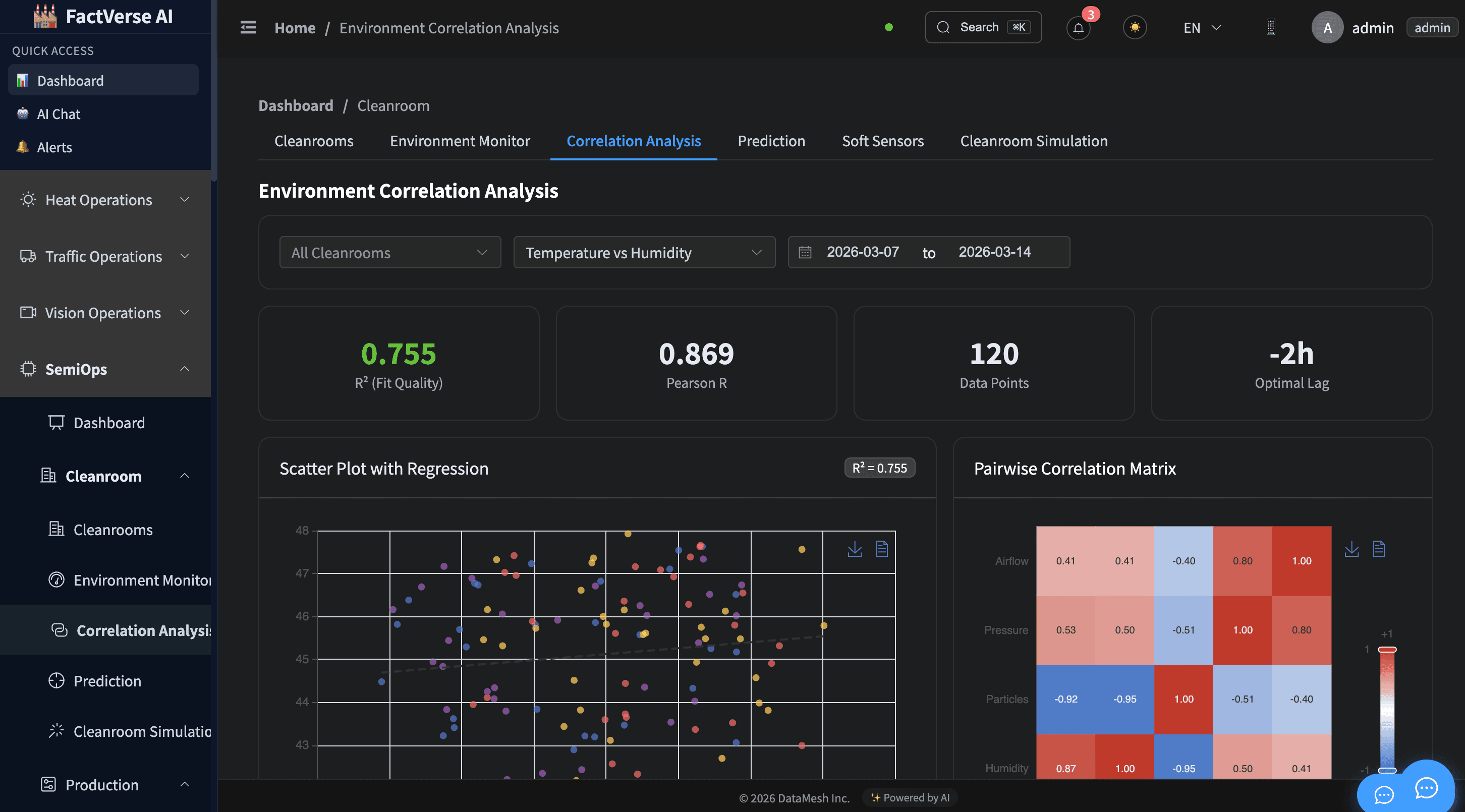
What changes for your operations team
Give operations and maintenance teams earlier warning, clearer evidence, and a direct path from insight to accountable work.
Work around the clock across selected live and historical signals, bringing changes that deserve investigation to the right team.
Combine trends, anomalies, operating conditions, maintenance history, and asset relationships so teams can understand why a finding matters.
Connect equipment, sensors, spaces, systems, documents, procedures, alarms, work orders, and evidence in one operating context.
Use reviewed outputs from project-enabled airflow, thermal, hydraulic, process, or other simulation workflows as additional decision evidence.
Help operators, reliability teams, and engineers compare evidence, prioritize attention, and approve the appropriate next step.
Carry approved findings into Inspector work, field evidence, verification, closeout, and feedback that improves later reviews.
How It Works
Step 01
Bring together signals from BMS, SCADA, CMMS, historians, sensors, databases, and business systems without replacing the systems your teams already use.
Step 02
FactVerse AI Agent reviews trends, anomalies, asset relationships, and operating history, then prepares an explainable recommendation for the responsible team.
Step 03
Teams review the recommendation with digital twin context and operating constraints before approved work moves into Inspector or an existing execution system.
Deep Dive
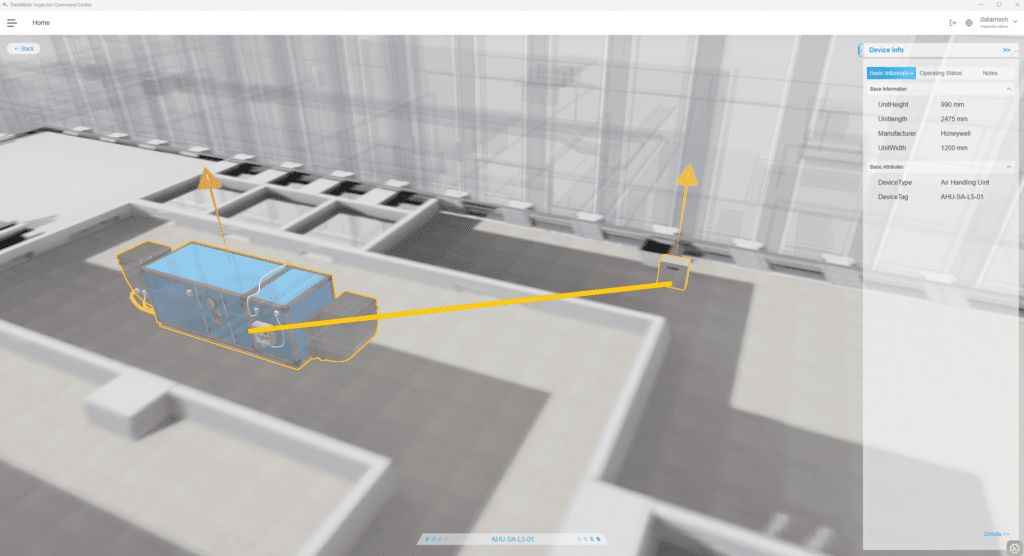
Industrial teams already have alarms, dashboards, maintenance systems, reports, and specialist analysis. The challenge is reviewing enough of that evidence consistently, understanding which change deserves attention, and carrying the decision into the operating workflow.
FactVerse AI Agent works around the clock across the assets, signals, and workflows selected for the deployment. It brings emerging conditions to the right team with the operational context needed for investigation.
Deep Dive
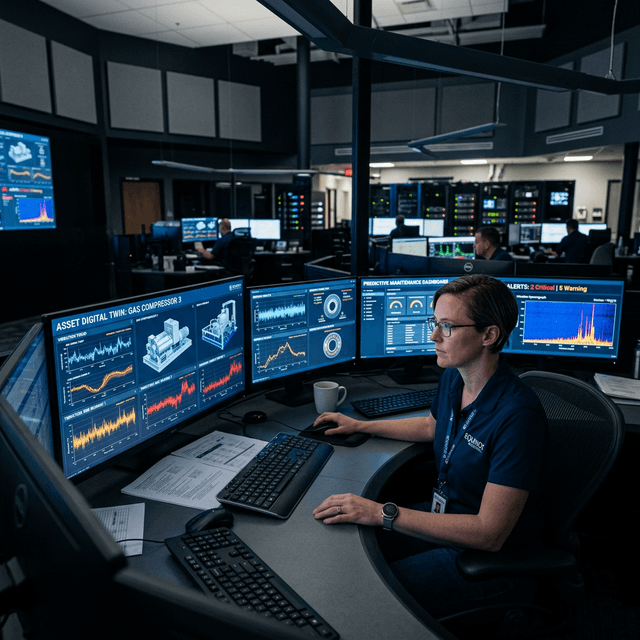
A temperature, vibration, pressure, alarm, or work record rarely tells the whole story. FactVerse connects the signal with equipment identity, location, connected systems, process state, documents, maintenance history, inspections, and earlier action.
Project-enabled simulation can add another evidence layer. Reviewed outputs from airflow, thermal-fluid, hydraulic, process, rigid-body, or resilience studies can enter the same operating context with model identity, assumptions, limits, findings, and review records. AI Agent helps teams relate those findings to current conditions and decide what deserves follow-up.
Deep Dive
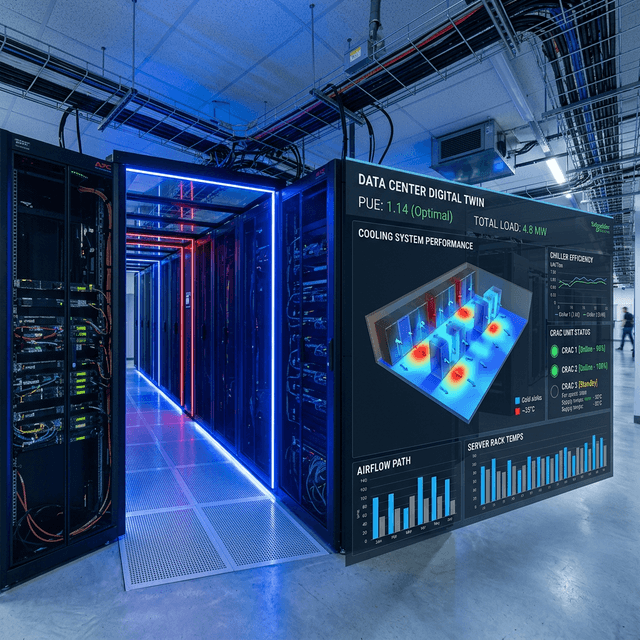
Authorized teams review the evidence and recommendation according to the customer's operating process. Approved findings can move into Inspector work orders, field instructions, evidence capture, verification, closeout, and controlled system updates where project guardrails allow them.
This handoff keeps the decision owner, execution record, and result connected. Operations can see which evidence led to an action, who approved it, what happened in the field, and whether the condition changed afterward.
Deep Dive
Completed inspections, maintenance actions, accepted recommendations, rejected suggestions, and field outcomes strengthen the next review. That feedback can refine operating knowledge and support machine-learning workflows over time while preserving human accountability and audit history.
A focused evaluation starts with one recurring operating decision, the required data and asset context, a named approval path, and measurable criteria from detection through verified follow-up.
Industry Scenarios
Start with a critical workflow, prove value with the operating team, and expand across assets, facilities, and sites on the same foundation.
Review alarms, environmental conditions, equipment state, maintenance history, and work status together across buildings and campuses.
Detect degradation earlier, focus attention on critical assets, and carry approved recommendations into field work and verification.
Bring approved thermal, airflow, hydraulic, process, or resilience findings into the same context as current assets and operating records.

Coordinate daily review and operational follow-up across data centers, semiconductor facilities, district heating, and other asset-rich sites.
Why FactVerse
FactVerse brings together capabilities that are usually separated across dashboards, IoT platforms, analytics projects, 3D environments, and work-management systems.
| Capability | BI / Dashboard | IoT Platform | AI Consulting | 3D Digital Twin | FactVerse |
|---|---|---|---|---|---|
| See problems | |||||
| Understand causes | |||||
| Predict trends | |||||
| AI-assisted review | |||||
| Physics validation | |||||
| 3D visualization | |||||
| Decision support | |||||
| Risk review | |||||
| Execution handoff |
ROI at a Glance
Focus people on the risks, decisions, and field actions that need their experience most.
Maintenance noise
Lower
with context-aware triage
Manual coordination
Less
with work order handoff
Response cycle
Faster
from finding to action
Decision review
Shorter
with twin context
* Outcomes depend on site scope, data availability, asset condition, and operating process maturity.
FAQ
It is the continuous interpretation and workflow-coordination layer for industrial operations. It reviews selected signals and evidence, explains findings in operating context, and helps teams prepare approved action.
Dashboards and IoT platforms provide data and status views. FactVerse AI Agent adds asset relationships, operating history, analytical evidence, reasoning support, and a governed path from finding to follow-up.
FactVerse provides asset and spatial context. Designer prepares scenes and scenarios. Project-enabled runtimes produce reviewed simulation evidence. AI Agent connects that evidence with current operations and coordinates the next review or action.
Operators, engineers, supervisors, and other authorized customer roles remain responsible for approval and execution. Permissions, review stages, audit records, and writeback guardrails follow the deployment.
Data Fusion Services can connect building systems, supervisory control and data acquisition, computerized maintenance management systems, enterprise asset management, sensors, historians, databases, and APIs.
Start with one high-value operating workflow, the required data and asset context, a named review owner, and measurable criteria for the finding, decision, field action, and follow-up.
Next Step
Choose a recurring alarm, a critical equipment group, or a facility review process. DataMesh will help connect the right context and demonstrate how insight can move into accountable action.
Continue with the most relevant products, solutions, guides, and public references for this topic.