
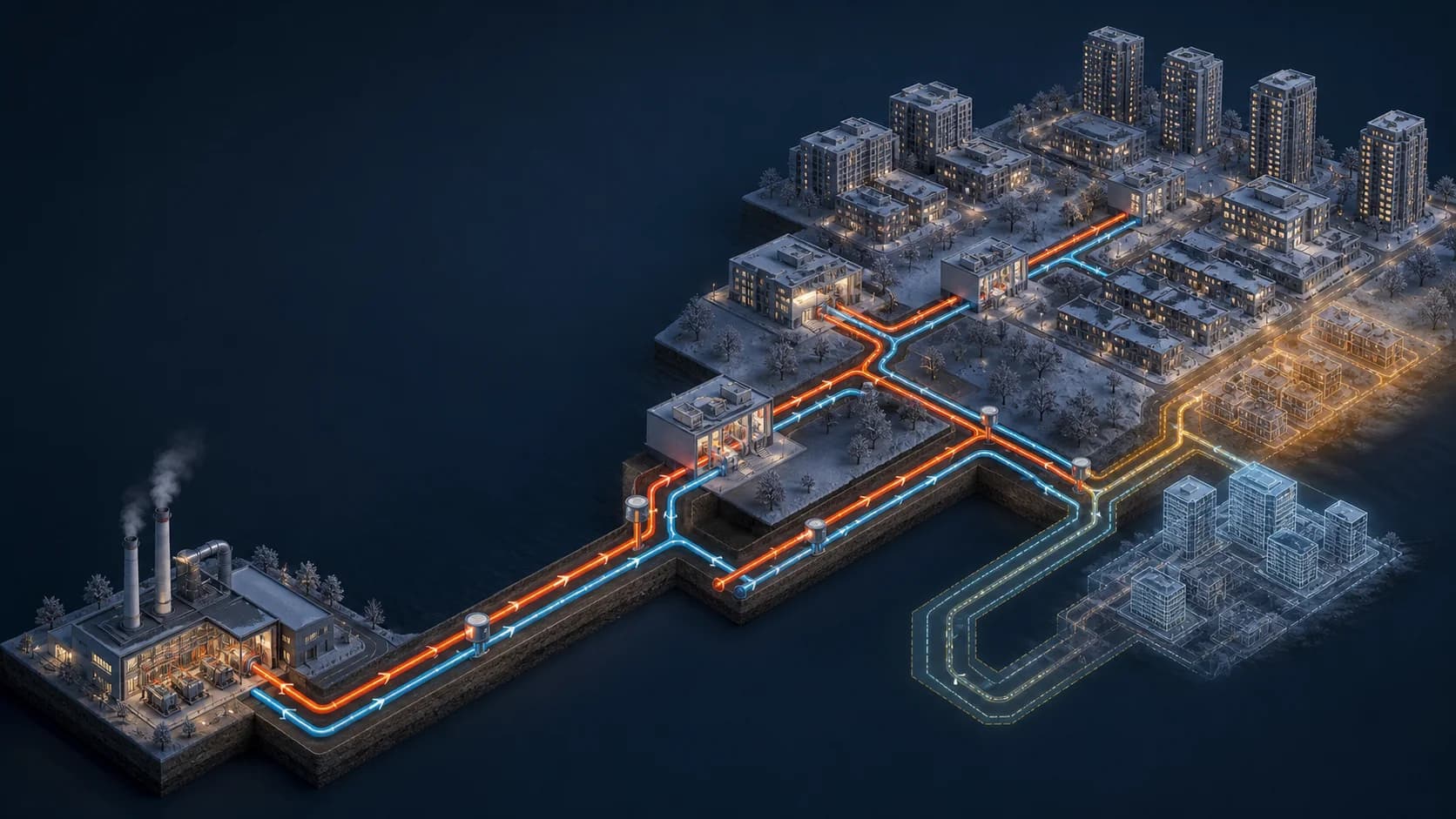
Connected operating zone
Review heat sources, network branches, substations, buildings, live conditions, alarms, and open work in map and topology views.
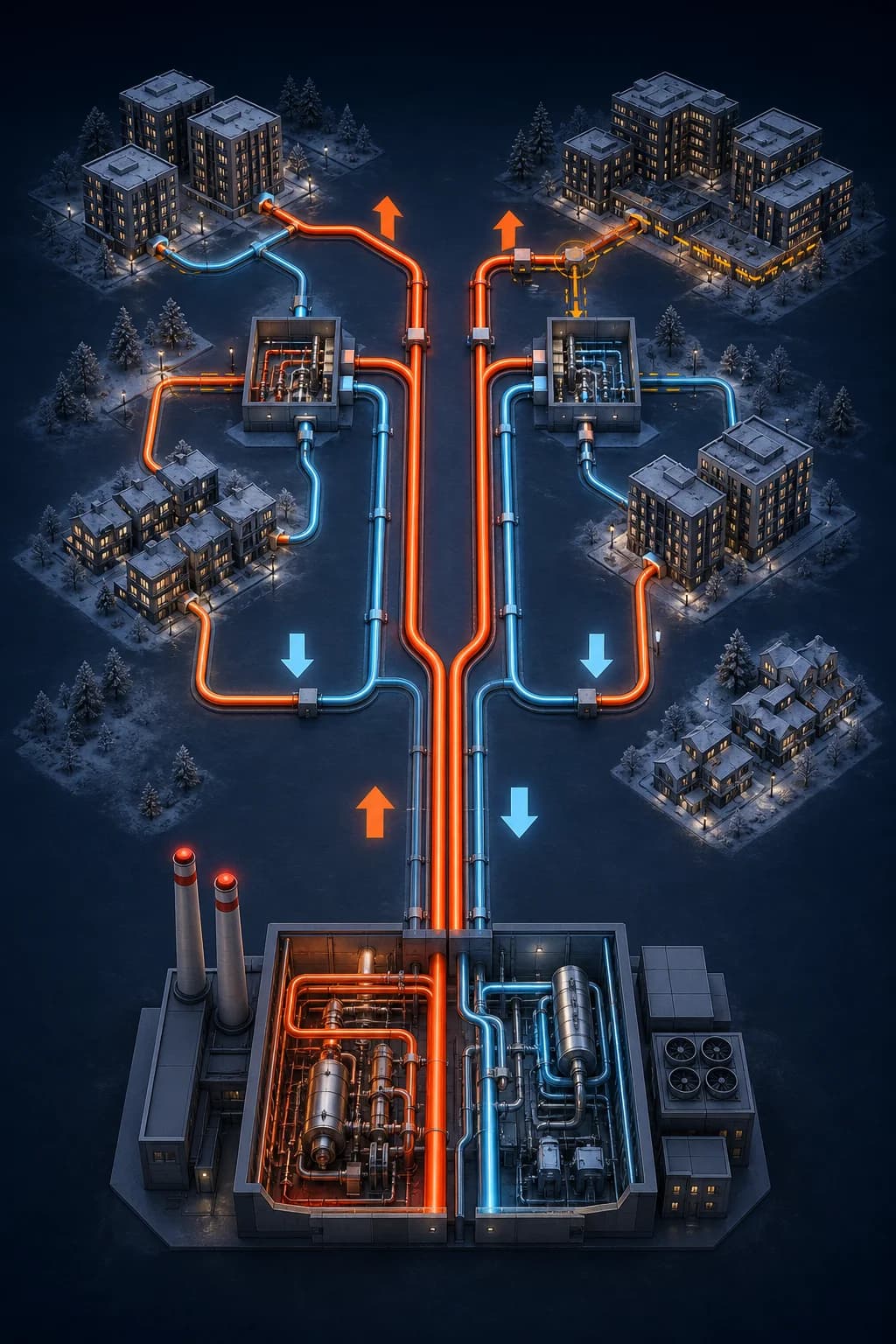
Turn heating-network evidence into timely, reviewable operating decisions
Connect measured network operations, calibrated hydraulic and thermal models, operator review, and field execution for imbalance, weather, preheating, and resilience decisions.
Connect data, workflows, and field execution so teams can understand context, act faster, and keep work traceable.
Connect heat sources, pipelines, substations, buildings, meters, weather, alarms, customer feedback, and work history in one operating view.
Review expected demand, weather-driven load changes, thermal inertia, and operating constraints before conditions shift.
Use measured pressure, flow, temperature, and heat data to calibrate project models and review residuals against agreed limits.
Compare network, station, and building behavior to identify branches and operating states that deserve engineering attention.
Prepare recommendations, approvals, controlled writeback, result checks, and audit records under project-defined operating guardrails.
Relate manuals, procedures, alarms, incidents, field experience, and work orders to the assets and network conditions involved.
Practical applications and proven success scenarios across industries.
Review heat sources, network branches, substations, buildings, live conditions, alarms, and open work in map and topology views.
Compare demand, outdoor conditions, thermal response, and selected preheating strategies before a cold period reaches the network.
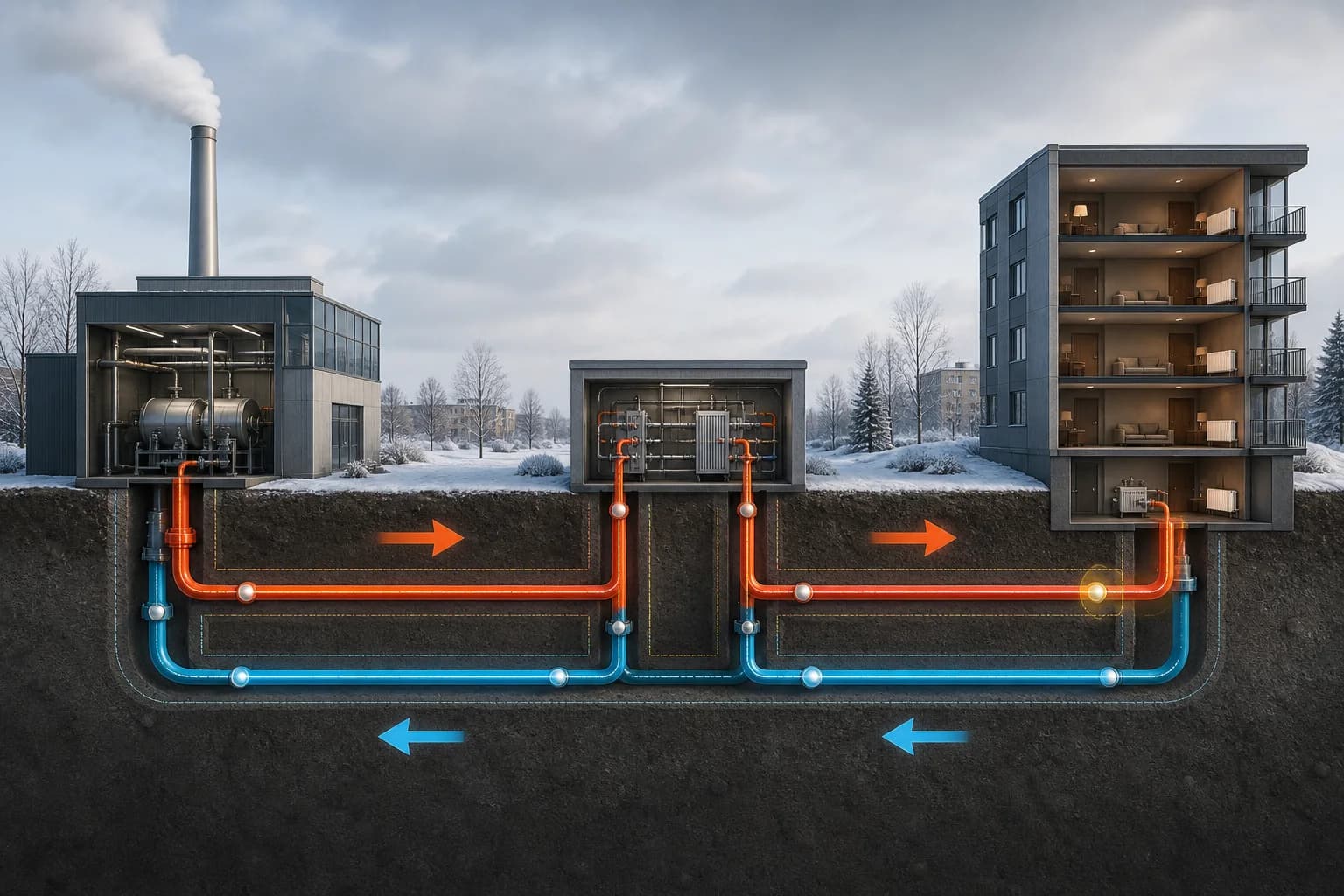
Relate pressure, flow, supply and return temperatures, valve state, station behavior, and building response across the affected branch.
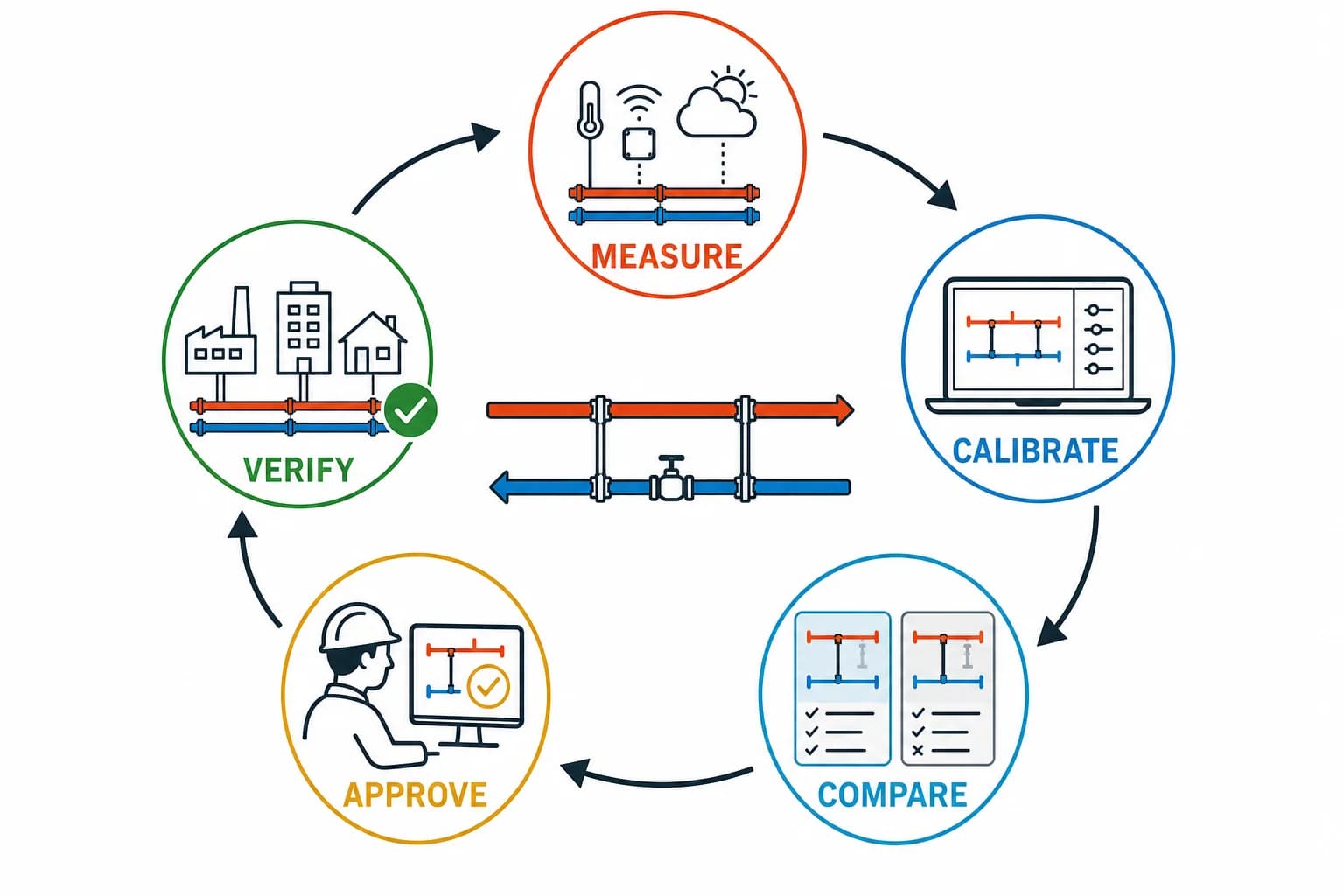
Calibrate a project model, review residuals, and compare weather, load, balancing, and resilience options with stated assumptions.

Route approved findings into inspection, maintenance, balancing, insulation, valve, or control tasks with traceable execution records.
District heating operators balance service continuity, energy use, network constraints, weather variation, equipment condition, and customer comfort across a system that responds over time. Data often arrives through separate control, meter, weather, billing, customer-service, and maintenance systems. By the time a pattern becomes clear, teams may already be responding to complaints, local imbalance, repeated alarms, or avoidable field work.
DataMesh Smart District Heating connects those signals to heat sources, network branches, substations, buildings, equipment, and work history. Operators can review what changed, where the impact is propagating, which assumptions support a recommendation, and what action requires approval.
The solution combines two complementary layers:
Smart District Heating is the customer-facing solution. HeatOps provides district-heating intelligence within FactVerse AI Agent, while the wider DataMesh platform connects data, network semantics, operational review, and field execution.
Data Fusion Services connects selected supervisory control and data acquisition systems, meters, historians, weather services, billing, customer feedback, and maintenance platforms. FactVerse relates each signal to heat sources, pipelines, substations, pumps, valves, heat exchangers, building zones, and responsible teams.
This operating context lets teams move from a temperature, pressure, flow, makeup-water, or heat-quantity change to the affected network branch, related equipment, current alarms, recent work, and customer impact. FactVerse AI Agent supports investigation and recommendation workflows, while Inspector coordinates approved field actions and closure evidence.
Project-enabled hydraulic and thermal analysis uses a graph-based network model shaped by topology, pipe and station parameters, building response, and measured operating data. Hydraulic calculations compare flow and pressure behavior. Thermal calculations represent network heat transport, losses, station exchange, and aggregated building response at the level required for the decision.
Calibration estimates selected resistance, heat-transfer, and thermal-response parameters from measured time series. The project team reviews data coverage, residuals, conservation checks, model assumptions, and customer-approved limits. This separates exploratory comparisons from models prepared for site-specific planning.
A calibrated project workflow can compare questions that are difficult to answer from dashboards alone:
Scenario results are presented with their inputs, limits, residual evidence, and review status. Absolute site conclusions require the telemetry and calibration scope agreed for the project.
Forecasts and model comparisons become useful when teams can act on them. FactVerse AI Agent can prepare a recommendation with the affected scope and supporting evidence. Operators review the proposal against current conditions and operating rules. Inspector can then create inspections, maintenance tasks, balancing work, insulation repair, or verification activities.
Where a project enables controlled writeback, permissions, human approval, rate limits, physical constraints, rollback behavior, and audit records govern every action. Teams can review the observed result before extending the control scope.
Each planning study should state the model version, data window, topology version, calibrated parameters, residuals, scenario inputs, operating limits, and named reviewers. Missing telemetry, unverified topology, sparse indoor measurements, or limited weather coverage reduce the conclusions that can be drawn.
This evidence structure helps operators compare alternatives without turning an illustrative model into an absolute promise. Recalibration triggers can be tied to network changes, equipment replacement, new instrumentation, or sustained residual drift.
A practical first phase covers a defined group of substations and buildings with verified topology, core pressure, flow, temperature, heat, and weather data, and one decision to improve. The team can begin with forecasting, imbalance diagnosis, or severe-weather planning, then validate the work-order and approval path before expanding.
The evaluation measures whether teams can trust the connected data, explain network behavior more clearly, compare scenarios with reviewable evidence, and carry an approved action through execution and verification.
Data Fusion Services provides governed connectivity. FactVerse supplies the network and asset context. FactVerse AI Agent hosts the HeatOps industry module for forecasting, diagnosis, knowledge assistance, and recommendations. Inspector manages approved work and evidence. Existing control and business systems continue to provide the authoritative operational services selected for the deployment.
Smart District Heating is the complete customer solution. HeatOps is the district-heating industry module within FactVerse AI Agent for forecasting, diagnosis, knowledge assistance, and recommendation workflows. Data Fusion Services, FactVerse, Inspector, and approved system integrations complete the operating loop.
The current operational layer connects network context, forecasting, diagnosis, operator approval, work orders, and controlled execution configured for the project. Hydraulic and thermal calibration and scenario planning are delivered through scoped engineering engagements.
The project uses verified topology and measured pressure, flow, temperature, heat, and weather data to estimate selected model parameters. The team reviews residuals, coverage, assumptions, and customer-approved limits before using the model for a site decision.
Data Fusion Services can connect supervisory control and data acquisition, safety instrumented systems, programmable logic controllers, meters, weather, billing, customer-service, and maintenance sources. Existing systems retain their operating authority while DataMesh provides shared context, analysis, review, and governed action paths.
Controlled writeback is configured only where the project defines permissions, human approval, rate limits, safety checks, rollback behavior, and audit requirements. Recommendation-first operation gives teams evidence to review before any control path is enabled.
Continue with the most relevant products, solutions, guides, and public references for this topic.