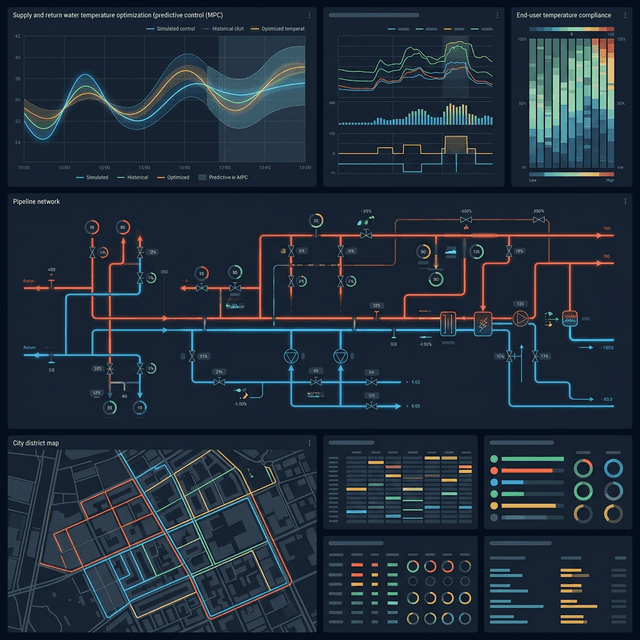
Supply temperature optimization
MPC adjusts supply temperature setpoints dynamically based on outdoor conditions, predicted load, and network thermal inertia — reducing energy consumption while maintaining end-user comfort compliance.
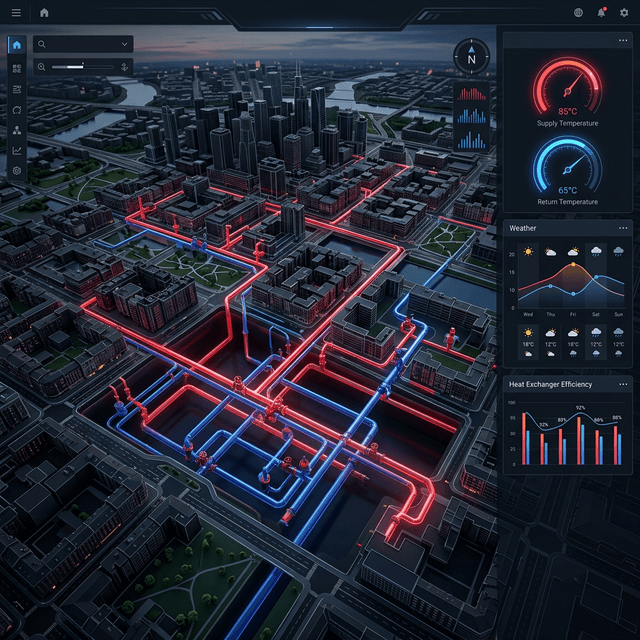
Predict Load. Optimize Flow. Guarantee Comfort.
FactVerse AI Agent optimizes district heating with MPC temperature control, weather-integrated load forecasting, hydraulic balance analysis, and automated pre-heating strategies.
Core building blocks that define how this page delivers operational value.
MPC optimizes supply and return temperatures across the heating network in real-time, balancing energy efficiency against end-user comfort requirements. Dynamic setpoint adjustment based on current thermal conditions and predicted load.
Combine weather API data with historical consumption patterns for 24-hour heating load prediction. Holt-Winters forecasting with confidence intervals accounts for seasonal patterns, day-of-week effects, and weather transitions.
Analyze pressure differentials and flow rates across the network to identify hydraulic imbalances. Recommend valve adjustments that improve heat distribution uniformity without increasing pump energy.
Automated pre-heating before predicted cold snaps. AI calculates optimal ramp-up timing and setpoints to maintain comfort while minimizing energy overshoot during temperature transitions.
Track indoor temperature compliance across all delivery points. AI identifies under-performing circuits and recommends corrective actions. Target: improve temperature compliance and comfort consistency.
Anomaly detection identifies excessive heat losses in network segments — pipe insulation degradation, leak indicators, or bypass valve issues. Kalman filtering distinguishes real anomalies from sensor noise.
Practical applications and proven success scenarios across industries.
MPC adjusts supply temperature setpoints dynamically based on outdoor conditions, predicted load, and network thermal inertia — reducing energy consumption while maintaining end-user comfort compliance.
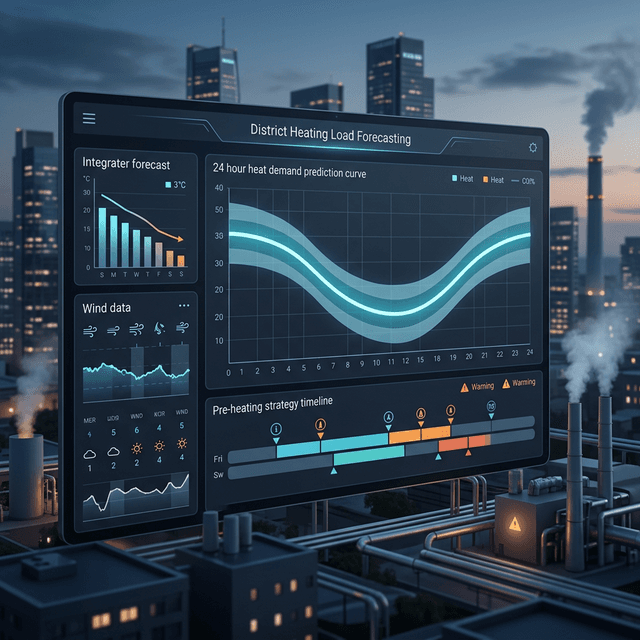
AI predicts temperature drops from weather forecasts and automatically initiates pre-heating strategies — ramping up supply temperature before cold arrives to prevent comfort complaints.
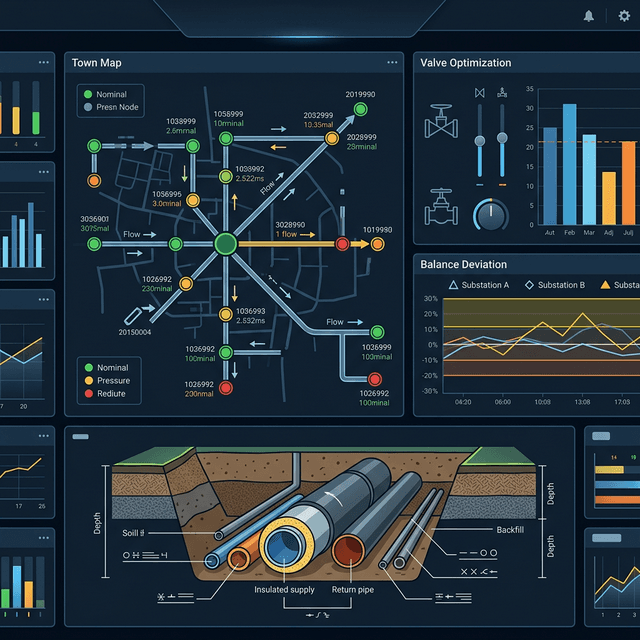
Continuous monitoring detects heat losses, hydraulic imbalances, and equipment degradation across the heating network — enabling proactive maintenance of distribution infrastructure.
District heating networks span kilometers of pipe, thousands of delivery points, and dozens of heat sources. Traditional control uses fixed supply temperature curves based on outdoor temperature. FactVerse AI Agent replaces static curves with dynamic optimization that accounts for thermal inertia, weather forecasts, and real-time network conditions.
Weather-integrated load forecasting gives operators forward visibility into heating demand. Pre-heating recommendations can be reviewed before cold snaps so teams can act proactively rather than reactively.
Hydraulic imbalances mean some buildings overheat while others freeze. AI Agent identifies these imbalances from network telemetry and recommends valve adjustments that improve distribution uniformity — improving end-user comfort consistency.
| Traditional Heating Control | FactVerse AI Agent |
|---|---|
| Fixed supply temperature curves | MPC dynamic optimization |
| Reactive cold snap response | Weather-predicted pre-heating |
| Manual hydraulic balancing | AI-detected imbalances with recommendations |
| Periodic insulation inspections | Continuous heat loss anomaly detection |
| Aggregate energy reporting | Per-circuit comfort compliance tracking |
Supply/return temperatures, flow rates, pressure readings, outdoor temperature, and weather forecasts. Data Fusion Services connects to SCADA systems and weather APIs through standard protocols.
Yes. The MPC and forecasting models scale from single-building systems to city-scale district heating networks. The knowledge graph adapts to network topology.
Networks with temperature compliance issues can use optimized supply temperature control and hydraulic balancing to improve comfort consistency.